A sample is useful only when everyone knows what it represents. Buyers often receive several versions, approve changes in messages and later discover that the factory copied an older sample or treated a visual mock-up as a production standard.
Good sample management in China sourcing gives every sample a purpose, version and decision. It also carries the approved details into the purchase order, production and inspection.
What sample management in China sourcing actually controls
Each link in that chain fails in a predictable way.
- No stated purpose — the sample arrives and the buyer and factory argue about what it was supposed to prove.
- No version number — the factory reproduces an earlier revision, and nobody can prove which one was approved.
- No recorded decision — approval sits in a chat thread that no inspector can act on.
- No handover — the approved detail never reaches the purchase order, so production and inspection work from different information.
A sample also has limits. It fixes what can be seen and measured on one physical item. It does not fix what the factory will do on the second thousand, and it does not override the written specification when the two disagree.
The sections below follow the chain in order.
Decide what the sample must prove
A sourcing sample may confirm an existing product, while a development prototype may test one function or appearance point. A pre-production sample should be much closer to the actual materials and manufacturing process.
Write the purpose before ordering the sample. Otherwise the buyer may reject a rough prototype for cosmetic reasons or approve a showroom sample that the factory cannot reproduce.
State which questions are intentionally left open for the next stage.
Issue one controlled sample request
Use the item code, drawing version, material, colour, artwork, packaging and required tests applicable to the sample.
Ask the supplier to identify deviations before dispatch. A substitute material or hand-made process can be acceptable for an early sample, but it must be visible.
Minden Intl’s China sourcing services cover sample coordination as part of a wider sourcing process.
Label and log every version
Assign a sample number and date. Record supplier, courier reference, specification version, cost, purpose and current status.
Photograph the label and the product together when the sample is received. This reduces confusion when several similar versions are reviewed.
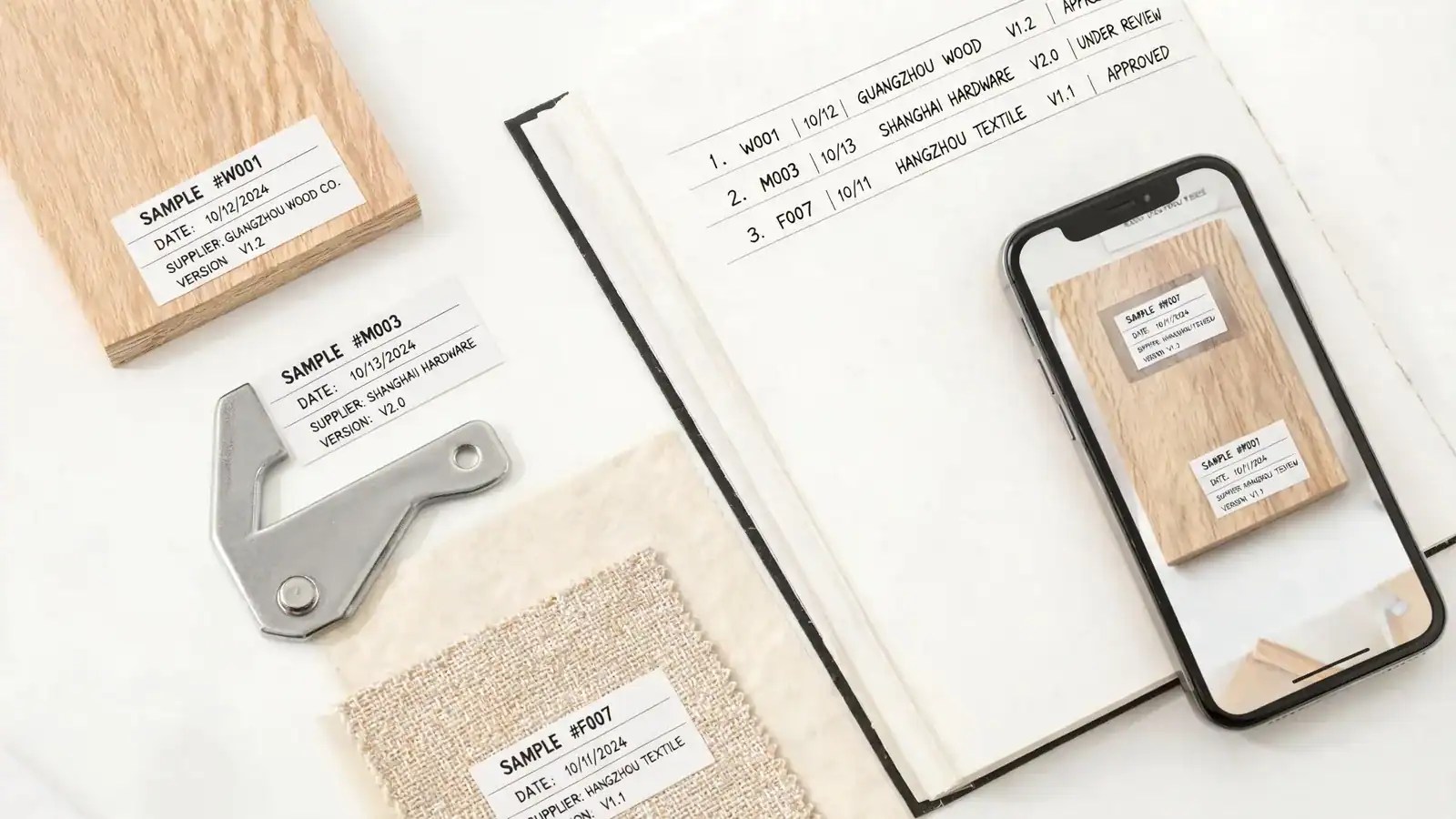
Sample management in China sourcing becomes unreliable when the physical item and feedback file cannot be matched.
Review with one consolidated feedback list
Inspect dimensions, materials, function, appearance, packaging and any project-specific requirements. For U.S. consumer-product guidance, use the CPSC business resources where relevant. Use measurements and clear photos to support comments.
Combine input from design, purchasing, quality and sales before sending feedback. Conflicting instructions from several people invite selective interpretation.
For every point, state approved, rejected, revise or pending. Avoid comments such as make it better without a defined requirement.

Control supplier changes
Ask the supplier to respond to every feedback item and confirm which changes will appear in the next sample or production.
When a change affects cost, tooling, timing, compliance or another approved feature, update the commercial and technical documents as well.
A silent sample change can make later quotations and inspections meaningless.
Define the approved production reference
Approval should identify the sample version and any exceptions that remain documented elsewhere. Keep the physical sample safely when practical.
The factory may need its own signed or sealed reference. Confirm that production and quality teams can access the same standard.
If the approved sample differs from the final specification, the written specification and change record must make the hierarchy clear.
Carry approval into inspection
Translate approved details into inspection checkpoints. Inspectors cannot check a sample feature they do not know matters.
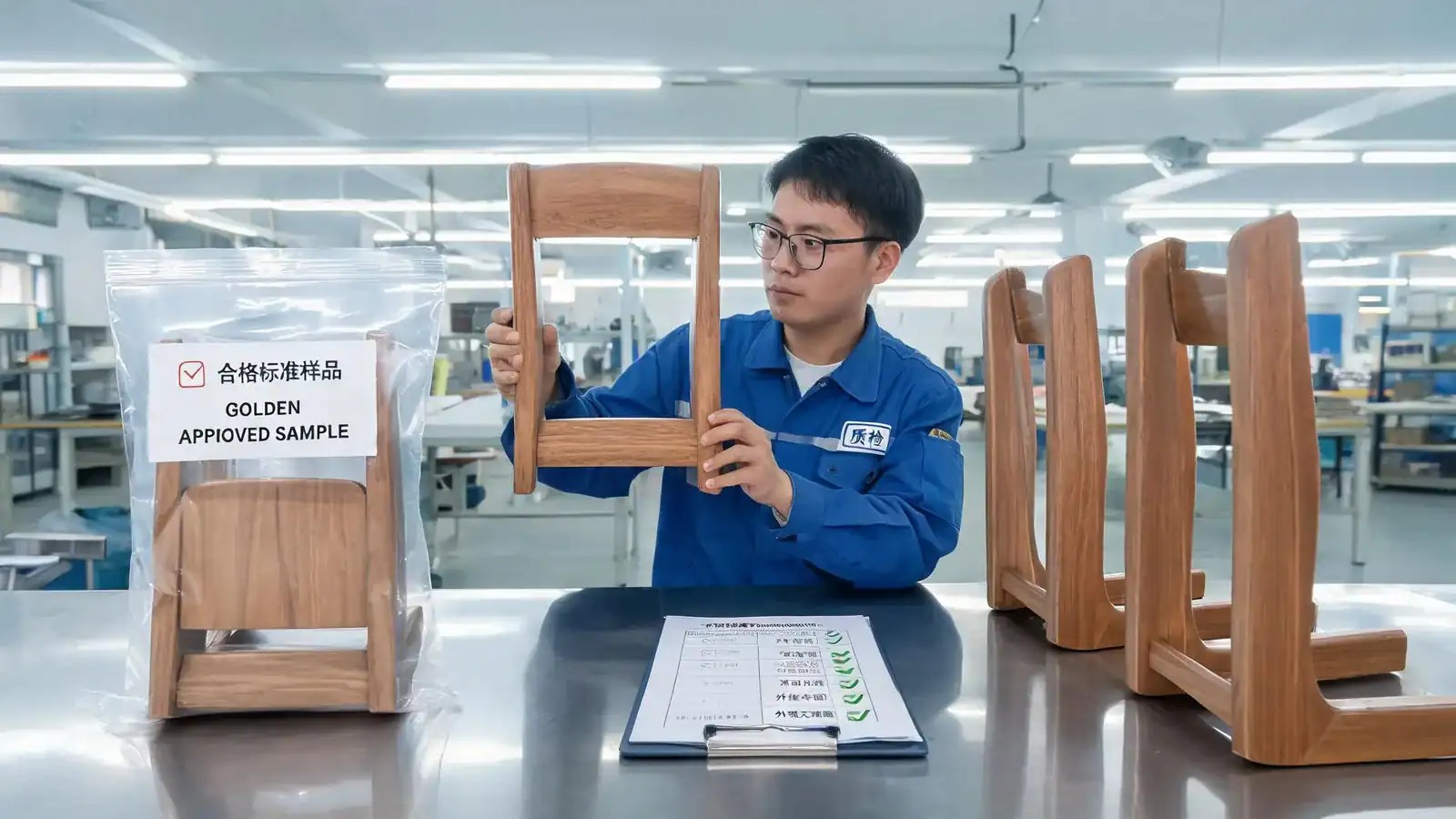
For repeat orders, review whether materials or processes changed since the original approval. An old sample should not automatically control a new order.
Use Minden Intl’s quality inspection service to link approved references with production and final checks.
Avoid common sample traps
Do not approve from supplier photos when colour, texture, fit or function requires physical review — a glassware sourcing case study shows how a supplier sample that looked right in photos failed on arrival.
Do not keep approvals only in chat. Do not let unapproved packaging or accessories enter production because the main product was accepted.
A disciplined sample process is not bureaucracy. It is the shortest path from buyer intent to a repeatable product.
Frequently asked questions
Is a supplier’s existing sample enough?
It can confirm general capability or an existing model, but it may not represent the exact materials, finish, branding, packaging or production order.
Can I approve a sample by photos?
Photos may close simple visual points, but physical review is safer when dimensions, colour, texture, assembly or function matter.
Who should keep the approved sample?
Ideally the buyer and factory each have a clearly identified reference, or another controlled method is agreed when duplication is impractical.
Does sample approval guarantee mass production quality?
No. Approval defines the target. Production controls and inspection are still needed to check whether the batch matches it.
Keep every sample decision connected to production
Minden Intl can coordinate sample requests, revisions, approvals and inspection references across Chinese suppliers.