Product sourcing and product development are often treated as the same job. They are not. Sourcing starts with a product that already exists or can be bought with limited changes. Development starts with an idea, specification or performance target that still has to be turned into a manufacturable product.
For overseas buyers, the difference matters because the supplier search, sample process, cost structure and risk are different. Choosing the wrong route can leave a buyer comparing prices before the product is defined, or paying for development work when a suitable existing product was already available.
product sourcing vs product development: the working principle
The safest approach is to make requirements visible, compare like with like and keep every approval traceable. That principle applies whether the buyer is choosing a standard item, developing a custom product or coordinating several factories.
The practical difference between product sourcing and development
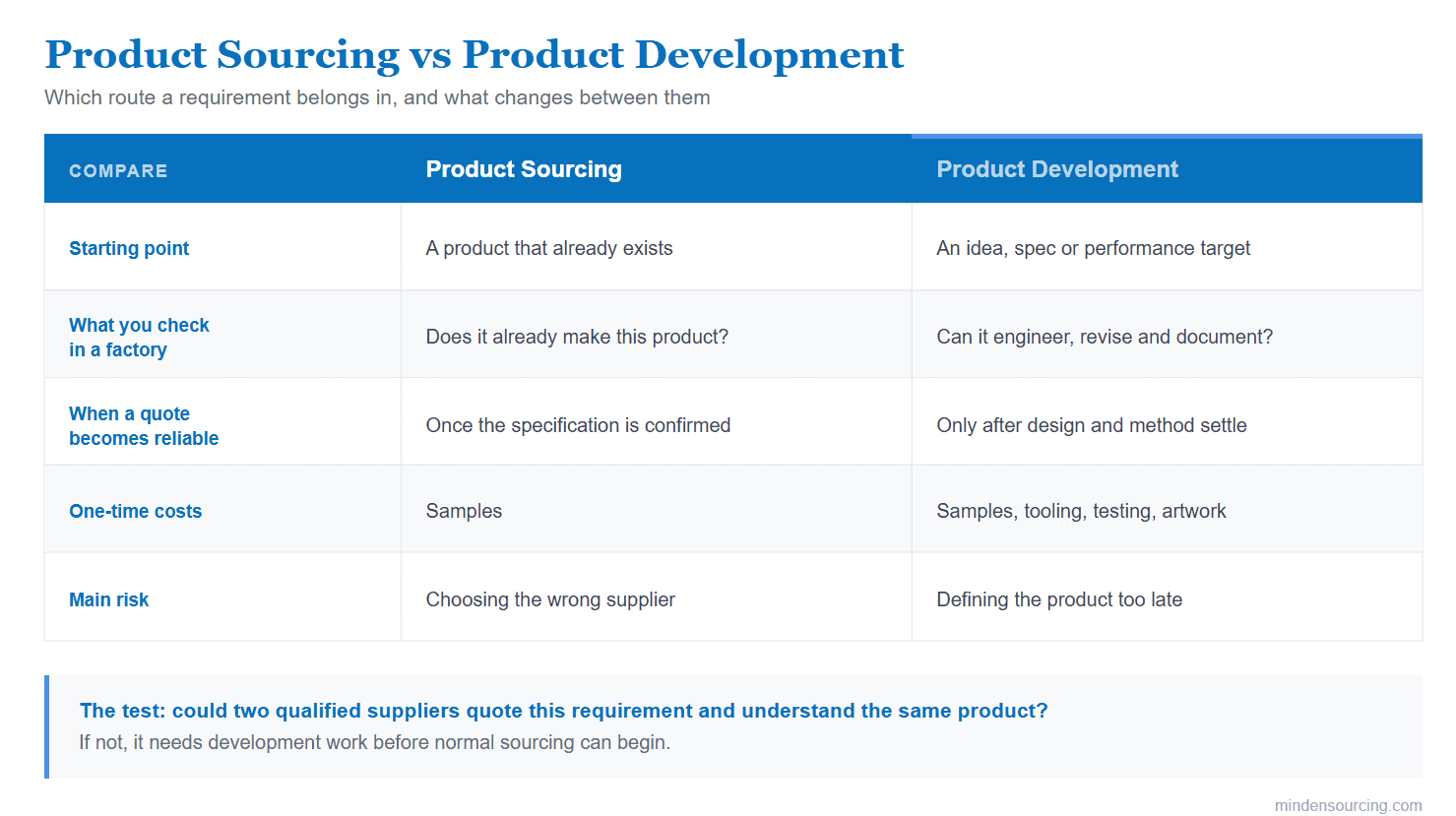
Product sourcing is about finding, comparing and managing suppliers for an established requirement. The work usually focuses on supplier capability, quotation accuracy, samples, quality controls and commercial terms.
Product development adds technical definition. Drawings, materials, tolerances, packaging, testing, tooling and revision control may all need to be agreed before a reliable production quotation is possible.
A useful test is simple: could two qualified suppliers quote the same requirement and reasonably understand the same product? If not, the project probably needs development work before normal sourcing can begin.
When product sourcing is the right route
Sourcing usually fits standard goods, proven designs, catalogue products and private-label items with limited changes. The buyer should still provide a clear specification; a reference photo alone is rarely enough.
The sourcing team compares more than unit price. It checks whether the factory makes the relevant product, whether the quoted material matches the requirement, what quality controls are realistic and how samples will be approved.
For a broader view of supplier management, see Minden Intl’s China sourcing agent service.
When product development is necessary
Development is necessary when the product has a new function, structure, material combination or appearance that cannot be purchased as a standard item. It also applies when an existing product needs substantial engineering changes.
The first task is to convert the idea into a controlled requirement. That may include drawings, dimensions, performance criteria, reference samples, packaging needs and the intended market. Open questions should be recorded instead of being hidden inside a quotation.The full sequence, from brief and specifications through samples to production, is set out in our guide to product development in China.

A factory that can produce a mature item is not automatically the best partner for an unfinished design. Development ability, engineering communication and revision discipline need separate review.
How the supplier selection process changes
For normal sourcing, buyers can compare qualified suppliers against a stable specification. For development, early quotations are provisional until the design and manufacturing method are settled.
Development projects benefit from stage gates: requirement review, feasibility feedback, prototype or sample review, correction, approved reference and production handover. Each gate should record what changed and who accepted it.
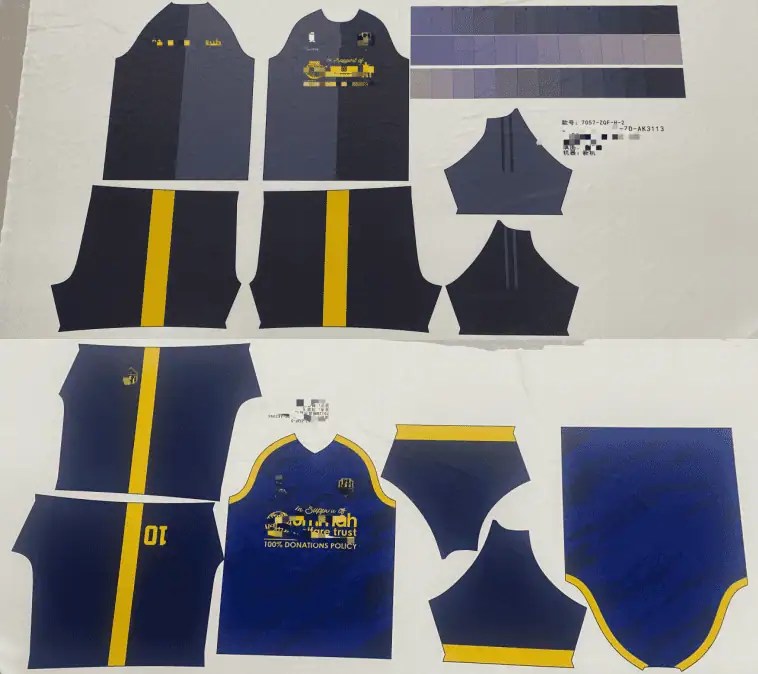
Supplier feedback is valuable, but it should not quietly replace the buyer’s commercial requirement. A cheaper change can affect durability, compliance, packaging or customer expectations.
Cost, timing and ownership questions to settle
Avoid promising a final cost or delivery date while major design questions remain open. Ask suppliers to separate product cost from tooling, samples, testing, packaging development and other one-time work where applicable.
Clarify who owns drawings, molds, artwork and approved samples, and what happens if the project changes supplier. These are commercial matters that should be confirmed in writing before money is committed.
Minden Intl’s sourcing services overview shows how sourcing, samples, quality control and shipping fit together after the route is chosen.
A decision checklist for buyers
Choose sourcing when the product is already defined, comparable and available from several capable suppliers. Choose development when the requirement still needs technical decisions, prototypes or a new manufacturing solution.
If the project sits between the two, split it. Source standard components or packaging separately while treating the genuinely new part as development. This creates clearer quotations and fewer assumptions.
Do not let a supplier label every customization as development. A logo, colour or routine packaging change may be a normal private-label variation rather than a full development project.
How to brief a China sourcing partner
Share the target customer, intended market, product use, specification, reference materials, expected customization and known compliance needs. For U.S. consumer-product guidance, review the CPSC business resources. Mark every point that is fixed and every point where supplier input is welcome.
Ask the partner to state which route it recommends and why. The answer should identify missing information, likely decision gates and the type of supplier required.
The goal of product sourcing vs product development is not to choose the more impressive process. It is to use the lightest process that still controls product, quality and commercial risk.
Frequently asked questions
Can sourcing include small product changes?
Yes. Colour, branding, packaging and other routine variations can stay within sourcing when the underlying product and manufacturing method are already proven.
Do I need complete engineering drawings before contacting suppliers?
Not always, but a development project needs enough controlled information for suppliers to evaluate feasibility. Missing details should be listed and resolved through samples or technical work.
Should I compare quotations before approving a sample?
You can compare preliminary quotations, but final commercial comparison is unreliable while materials, dimensions or manufacturing methods are still changing.
Can one supplier handle both sourcing and development?
Sometimes. The important question is whether that supplier has the relevant manufacturing and engineering capability, not whether it uses both words in its sales material.
Define the right route before comparing suppliers
Minden Intl can help turn an existing requirement or new product idea into a controlled sourcing plan, supplier brief and sample process.