Most buyers who go through it are not inventing something new. They are adapting something that already exists — a different size, a different material, their own branding, a design nobody in the market currently sells. That is where the difficulty starts, because a factory can only build what it can measure.
Who This Process Is For
This process fits retailers, wholesalers and brands who need control over what they sell rather than access to what is already in a catalog. You are usually in development territory when you have a reference image with no matching product on the market, need a specification change to an existing item, want your own packaging and branding on the product, or are moving from reselling other people’s goods to selling your own line.
It is worth being honest about when this is not the right process. If you are testing a category with a small trial quantity, buying an existing stock product is faster and cheaper. Development costs — samples, tooling, revision rounds, testing — only make sense when you expect repeat orders. A China sourcing agent should tell you which of those two situations you are in before quoting anything.The distinction between the two routes is laid out in more detail in product sourcing vs product development.
First samples set against the buyer’s reference images, where color and proportion differences show up earliest.
Step 1: Build a Clear Product Brief and Specifications
Factories quote from what they can see. A vague brief produces a vague quotation, and the gap gets filled with whatever is cheapest to make. A usable brief covers:
- Function and intended use
- Dimensions, weight and tolerance on each
- Material for every component, not only the main body
- Color reference — a Pantone code or a physical swatch, not a screenshot
- Destination market and the certification that market requires
- Packaging expectation: retail box, polybag, barcode, labeling
- Target unit price and realistic annual quantity
Reference photos deserve their own warning. A factory working from images interprets what it sees, and interpretation drifts — color shade, surface texture, the proportion of a decorative detail. We have watched three separate factories confirm this independently on the same project.
Write down what cannot change and what can. That single distinction saves more time than the rest of the brief, because it tells the factory where it is allowed to substitute and where it is not.
Step 2: Match the Product With the Right Supplier and Industrial Cluster
China’s manufacturing is organized geographically. Foshan and Dongguan for furniture. Yiwu for general merchandise, seasonal goods and decoration. Guangzhou for consumer goods, bags and apparel. Shenzhen for electronics. Chaozhou for ceramics. Sourcing outside the right cluster usually means your order gets subcontracted back into it, with a markup you never see.
Category experience matters more than a low quotation at this stage. A furniture factory that has cut a hundred custom bar units will spot a structural problem in your drawing that a general workshop will happily build and ship. That is the practical argument for going through a China furniture sourcing agent or a category specialist rather than a general trading contact when the product is complex.
Three questions before development starts: has this factory made something with the same shape, material and process, will it commit to a sample-first sequence instead of pushing straight to a production order, and is it the factory or a company reselling someone else’s line. On one custom decor project the final choice came down to comparable development experience and a willingness to sample first. Price was not the deciding factor.
Step 3: Develop Samples, Prototypes and Revisions
Samples move in stages. A first sample built from your brief. Revised samples correcting what was wrong. Then a pre-production sample, signed and sealed, kept as the physical reference for inspection later.
Sample charges are normal and cover setup time rather than material. Some factories credit them against a later bulk order. Ask before, not after.
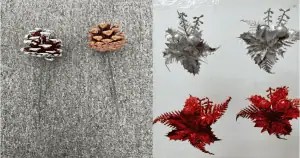
Two to three rounds is realistic for a visually specific design with no existing template in the market. In our custom Christmas decor case, a US horticultural wholesaler brought reference images of a decorative branch style that matched nothing in production anywhere. After two rounds of revisions the selected factory reached a 95%-plus visual match on shape, color and texture — close enough for approval, and a realistic outcome rather than a guaranteed one.

Sample variations laid out side by side, the stage where a design is either approved or revised again.
Case Study
Custom Christmas Decor Sourcing
Reference images matched nothing in production. Three factories screened, two sample rounds, one final fix before shipping.
Approve a physical sample, never a photo of one — factory lighting flatters. Keep one sealed sample in China with whoever handles your inspection, because a written specification and a physical reference catch different problems.
Step 4: Confirm Quotation, MOQ and Tooling Requirements
Quotations given before sampling are estimates. The real number arrives once the material, process and reject rate are known, and it usually moves.
A complete quotation states the unit price, the minimum order quantity, tooling cost, sample cost, production lead time, packaging specification, and the trade term — EXW, FOB or DDP. Missing any of these means the number is not comparable to another factory’s number.
Tooling is where custom product development in China gets expensive. Molds, dies, printing plates and embroidery programs are paid separately from the unit price, normally before sampling begins. Three things need to be in writing: what the tooling cost covers, who owns the mold, and where it is stored. Ownership disputes surface at the worst possible moment — when you want to move production elsewhere.
On MOQ, ask what is driving the number. It is rarely the factory being difficult. It is a fabric roll, a plating batch, a minimum component purchase, a color changeover on the line. Once you know which constraint sets the MOQ, you can sometimes change one component or drop one color and cut the requirement substantially. Most factories will not volunteer that.
Step 5: Manage Production and Quality Control
Approve the pre-production sample in writing before mass production starts. Everything after that is checked against it.
The real risk in OEM product development in China is not the first article. It is drift — a component runs out mid-production, a substitute goes in quietly, and the last cartons no longer match the sample you signed. On the Christmas decor order one style came back deviating from the reference because a matching accessory was no longer available when production ran. It was caught before shipment, corrected with a color adjustment and an accessory swap, and re-inspected.
Practical sequence: a check during production while there is still time to fix things, then a pre-shipment inspection against the sealed sample covering appearance, function, dimensions and packaging. Remote inspection through detailed photographs and full-carton video works when the person reviewing knows the product — that is how the same order was signed off from the other side of the world.

Production units measured against the approved sample, checking that later batches still match what was signed off.
Compliance testing bngs here, not at the end. Children’s products sold into the US require third-party testing and a certificate under CPSC testing and certification rules, and many categories entering the EU need CE marking before they can be placed on the market. Test units taken from production, not the polished sample the factory made by hand.
Step 6: Packaging, Consolidation and Shipping
Packaging is part of development, though it usually gets treated as an afterthought. Retail artwork, barcodes, country-of-origin marking, inner protection and the master carton specification all need confirming before the production run finishes. Product packaging decided late is a common reason a finished order sits in a warehouse.
Carton dimensions matter more than most buyers expect. Packaging determines how many units fit a container, which determines your freight cost per unit. A box 2 cm larger than it needs to be can cost more over a year of shipments than the packaging itself.
New development rarely ships alone. When the product joins existing orders from other suppliers, a shipment consolidation service lets everything be received, checked and loaded together instead of arriving as separate small shipments with separate fees. On the Christmas decor project the new decor and an existing planter pot order together came close to filling a 40-foot container, so it went out as FCL rather than LCL. Below that threshold, forcing a full container costs more in empty space than it saves in handling.

Cartons received, checked and staged in our warehouse, where packaging errors get caught before the container is sealed.
Common Product Development Delays and Risks
Endless sample loops. Revision rounds without a decision deadline are the most common cause of missed seasons. Set a limit and a date at the start, and decide what “acceptable deviation” means before the first sample arrives.
Changes after tooling is cut. A dimensional change is cheap on a drawing and expensive once a mold exists. Confirm dimensions on a physical sample before tooling is paid for.
Component availability. Trims, accessories, hardware and specialty materials come from separate suppliers with their own stock cycles. A component that existed during sampling may not exist during production.
Calendar. Chinese New Year stops production for weeks and the period before it is fully booked, while peak export season tightens container space. A China product development timeline planned without those two facts is a timeline that slips.
Certification discovered late. Testing requirements found after production is finished can mean reworking or scrapping the run. Confirm the destination market’s requirements during the brief stage.
Design ownership. If the design is yours, put exclusivity, mold ownership and non-disclosure in a written agreement before samples circulate. A factory that has developed your product can sell a near-identical version to someone else unless something prevents it.
How Minden Supports Product Development in China
Minden Intl is a sourcing agent. We are not a factory and not a trading company, which means we have no reason to steer a product toward a particular production line.
Our teams sit in Yiwu and Guangzhou, so factory selection, sample chasing and inspection happen in person rather than over email. We translate a brief into specifications a Chinese factory can quote against, compare suppliers inside the right cluster, manage the sample rounds and revisions, check production against the sealed sample, and handle packaging, consolidation through our own warehouse, and export documentation. Our service fee is quoted separately from the factory price, so you see both.
Development is judgment as much as process — when to accept a sample, when to push another round, when an MOQ is real and when it is negotiable. That judgment comes from doing it repeatedly across categories.
Send Us What You Have
A reference photo, a drawing, or a product you want changed. We will tell you whether it genuinely needs development or whether something close already exists, what the sample stage will involve, and what it will cost — before anything is quoted.
FAQ
How long does product development in China take?
There is no standard timeline. It depends on the number of sample rounds, whether tooling is required, and material availability. Ask each factory for a written lead time per stage — sampling, tooling, production — rather than a single figure for the whole project.
What is the difference between OEM and ODM?
OEM means the factory manufactures to your design and specifications. ODM means you start from the factory’s existing design and modify it. ODM is faster and cheaper because the tooling already exists; OEM gives you a product competitors cannot order from the same catalog.
Who owns the mold if I pay for tooling?
Whoever the written agreement says owns it. Paying for tooling does not automatically transfer ownership, and molds are usually stored at the factory. Confirm ownership, storage and transfer conditions before payment, not when you want to change supplier.
Can a Chinese factory copy a product from photos alone?
Close, but rarely exact. Color, texture and small proportions drift when a factory interprets an image instead of working from a physical sample. Budget for at least one revision round, and send a physical reference whenever one exists.
Do I need certification before production starts?
It depends on the product category and destination market. Requirements should be confirmed during the specification stage, because testing is done on production units and a failed result after the run is finished is expensive to fix.