Luxury home furniture sourcing from China usually means one category at a time — a sofa here, a dining set there. This client sent a floor plan instead of a product list and asked for the whole house at once: 105 pieces, every furniture item made to order, built across 19 factories, and delivered to his door in a single container.
Project at a Glance
- Client: private buyer furnishing a newly built home near Washington, DC — not a wholesale importer.
- Scope: 105 items across eight categories, every furniture piece made to order.
- Suppliers: 19 factories; three custom-furniture factories compared before selection.
- Confirmation phase: about 11 weeks, from first enquiry in early July 2025 to every specification locked in late September 2025.
- Production to sailing: about 8 weeks, container departed mid-November 2025.
- Shipment: one 40ft high-cube container, DDP to the client’s home address.
- The part buyers misjudge: confirming the specification took longer than building the furniture.
A Floor Plan Instead of a Product List
The first message came in early July 2025. The client had just finished building a new home in the Washington, DC area and wanted the interior furnished as one coordinated project rather than room by room. He sent the floor plan first and asked us to match furniture and greenery to the actual spaces.
He was buying for himself, not for resale. That changes the shape of a project completely. A wholesale buyer wants a repeatable specification at a defensible price. A private buyer furnishing his own house wants the finished room to look like the picture in his head, and he will keep pushing until it does. Fabric, dimensions, style, colour, table legs and stone grain were all selected by him personally.
What a Whole-House Order Actually Contained
The confirmed scope came to 105 items across eight categories:
| Category | Quantity |
|---|---|
| Custom sofas | 4 |
| Custom dining chairs | 16 |
| Long dining table (natural stone top) | 1 |
| Round dining table | 1 |
| Coffee tables | 3 |
| Artificial plants | 38 |
| Large artificial trees | 2 |
| Flower pots | 40 |
| Total | 105 |
Nothing came off a catalogue page. Fabric was chosen sofa by sofa, and separately again for the pillows that went with each one — so a single sofa could involve two or three material decisions before production started.

Three Factories Compared, Nineteen Factories Used
For the custom upholstered and stone furniture, a broad supplier search is the wrong tool. Volume per item is low and specification is high, so the risk isn’t price — it’s a factory that agrees to everything and then quietly builds what it normally builds. We went directly to three long-term partner factories that specialise in custom furniture and compared them on workmanship precision, fabric grade, stone sourcing channels, delivery reliability and price band.
The factory we chose wasn’t picked on price. It was the one with the most consistent finishing and — the part that mattered more than we expected — the one willing to photograph and video the build at every stage without being chased for it.
That shortlist only covered the furniture. Across all eight categories the finished order ran through 19 factories in total. Artificial plants, trees and pots are a different manufacturing world from upholstery, and a furniture factory that agrees to supply them is almost always buying them in and adding a margin. Splitting the categories out is standard work for a China furniture sourcing agent, but it is also why a whole-house order is harder than it looks: manufacturing is the easy half, and coordination is the other half.
The whole package was quoted as one price, itemised by category. On mixed orders this matters more than buyers expect. A single lump-sum figure hides which line is expensive and makes it impossible to cut scope later without reopening the entire quote.
Eleven Weeks to Confirm, Eight Weeks to Ship
The dates are worth stating plainly, because they are the opposite of what most buyers assume.
First enquiry: early July 2025. Every specification finally locked: late September 2025 — about 11 weeks. Container sailed: mid-November 2025 — 8 weeks after confirmation. Just over four months from first message to departure, and the confirmation phase took longer than the building phase.
Buyers plan around factory lead time. On custom furniture that is the wrong clock to watch. Production is reasonably predictable once a specification is frozen; what isn’t predictable is how long it takes to freeze it. Three things ate those eleven weeks.
The sofas came first. The client reviewed detail photos partway through and kept finding differences between the factory’s build and the reference he had in mind. Then the stone: the long dining table used a rare blue stone in the labradorite family, where no two slabs are alike and a wrong pick can’t be corrected after cutting. Then the inspection window: large furniture gets built into timber crates at the factory, and once that happens there is no clean way to reopen a piece and repack it.
None of those is unusual on its own. Having all three inside one order, across 19 factories and eight categories, is what made it demanding.
Confirm First, Produce Second — On Every Custom Item
Every custom item ran on one rule: nothing enters production until the client has signed off on that stage in writing.
For the sofas that meant fabric selection, then a structural drawing from the factory, then client confirmation, then production start, then detail photos partway through, then a final confirmation on the finished piece. For the tables: style, then legs and finish colour, then stone grain, then dimensions, then production updates as the piece was built.
It looks slow written out. It is faster than the alternative. Once foam is cut, a frame is welded and a slab is trimmed, “we’ll adjust it later” stops being an option — the remedies left are remake or accept.
Our custom furniture approval checklist sets out the same sequence as a reusable list.
The Sofa That Took Round After Round to Get Right
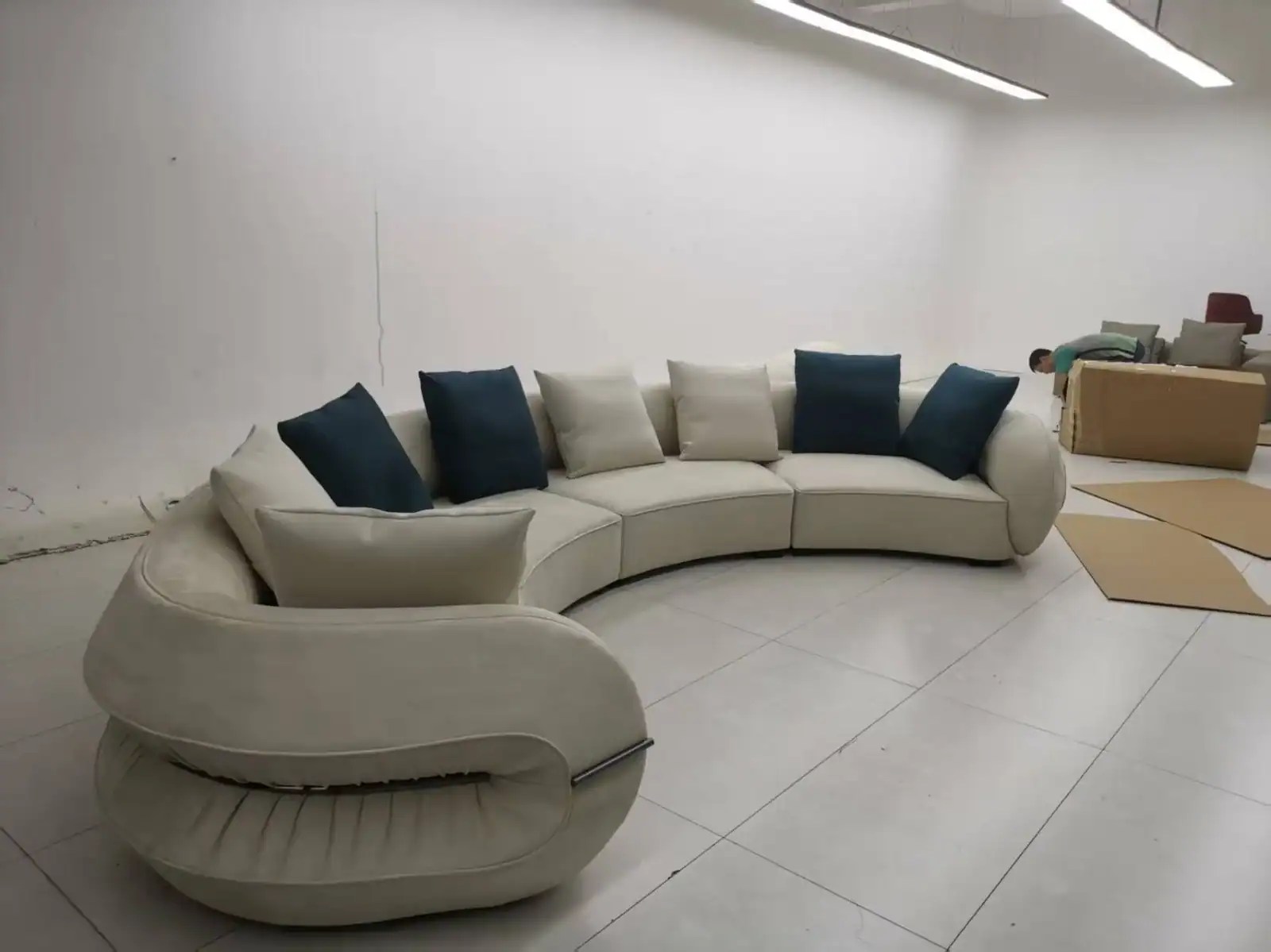
Sofa customisation was the most communication-heavy part of the project. The client marked up renderings and photos directly and sent them back: the backrest looked too upright compared with the original, one curve was too sharp, the base was flat where the reference had it rounded the whole way through including the polished metal, cushion firmness needed rework, and seam gaps needed attention.
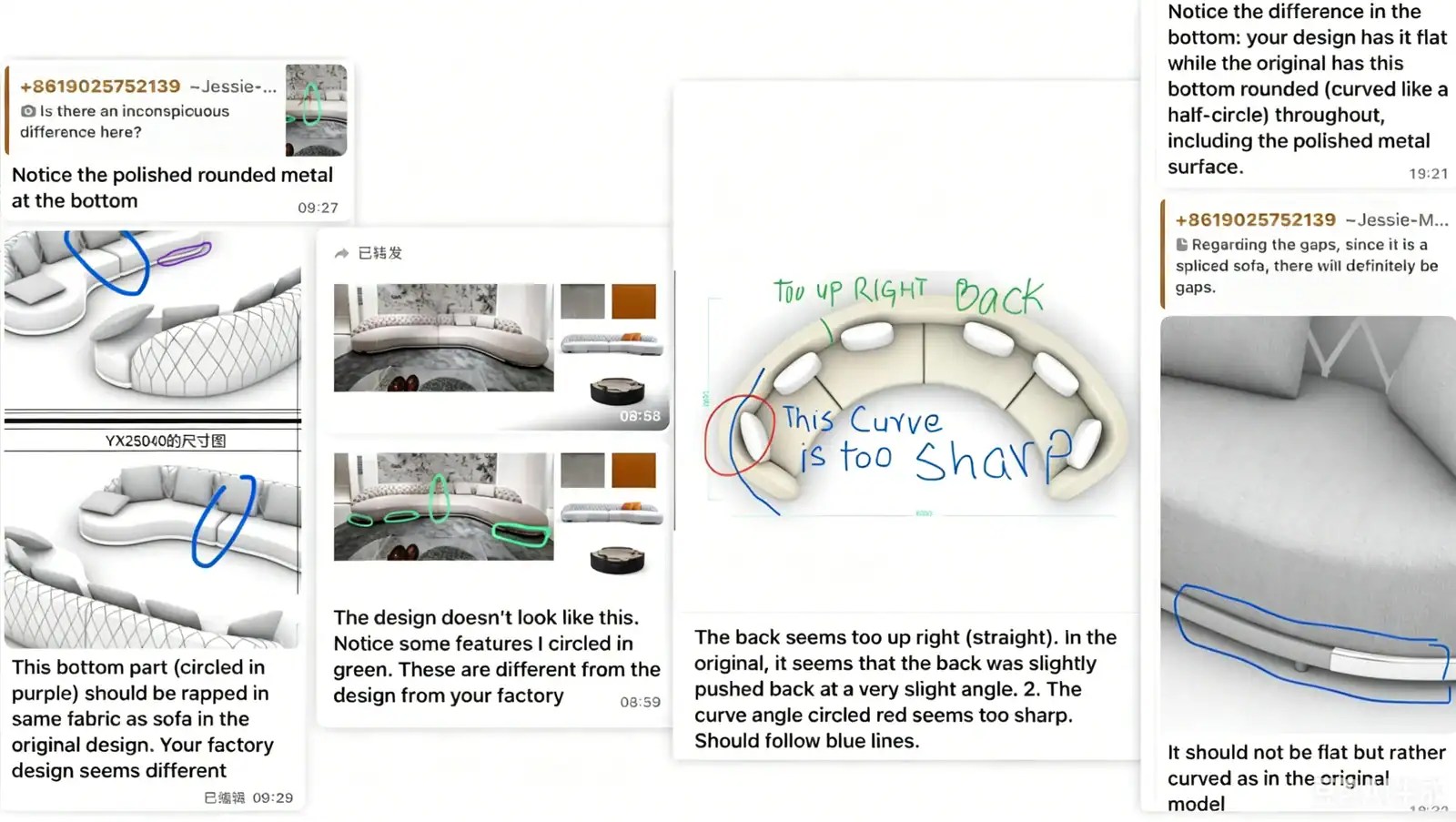
Each round ran the same way: record the feedback precisely, translate it into something a production team can act on, get the revision built or redrawn, send it back. It took several passes before the curve, the back angle and the cushion feel all matched.
One point we raised rather than waited to be asked about: this was a spliced curved sofa, built in sections. Visible gaps between modules are inherent to that construction, not a defect. Telling a client that before production is a short conversation. Telling them after delivery is a dispute.
Picking a Stone Slab That Can’t Be Reordered
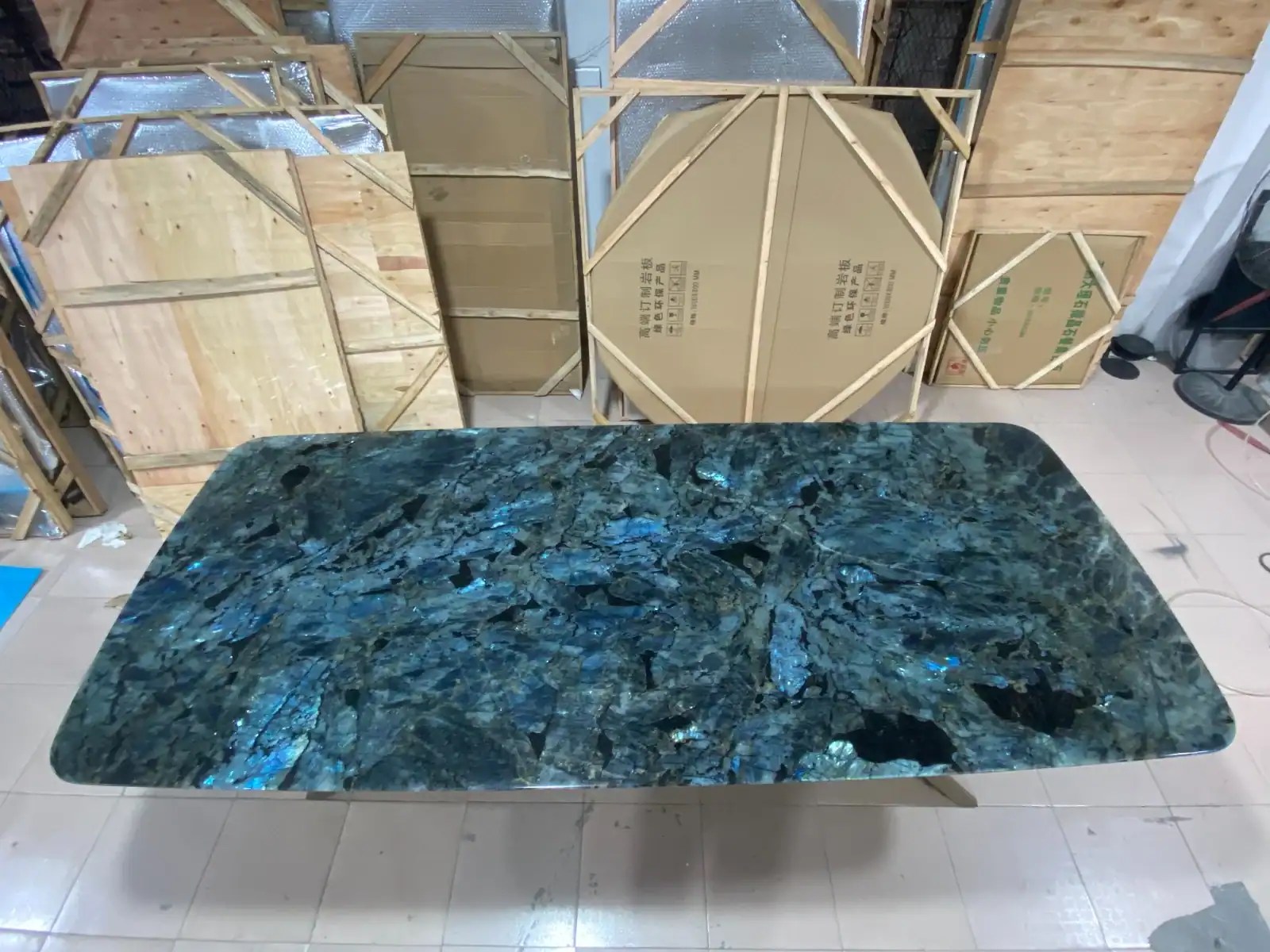
The long dining table used a blue stone from the labradorite family, valued for the way it flashes blue and green as light moves across it — a natural optical effect known as labradorescence. Every slab is different, and there is no reorder. You cannot ask a quarry for another one that looks the same.
So we had the factory shoot video and multi-angle photos of the actual slabs in stock, each shown with its measurements, and sent them over for the client to pick his own piece before anything was cut. He approved the specific slab that went into his table — not a sample chip, not a catalogue image.
Checking Everything Before the Crates Went On
Oversized furniture breaks the normal inspection sequence. On a carton-packed order you pull cartons at random, open them, check, reseal. Here, once a sofa or a stone tabletop is inside a timber-framed crate, opening it again risks more damage than the check would catch. So inspection moved earlier — after production finished, before crating, over live video with each factory.

We worked through sofa fabric, stitching and finished dimensions; the stone tabletop for chips, cracks or edge damage; structural stability on every chair and table; and the shape of each artificial plant against the pot it was paired with. Counts and labels were checked against the packing list as crates were built. For a reusable version of these checks, see our furniture quality control checklist for importers.

We say this plainly to furniture buyers: ask for the pre-crating video check by name. Most factories will do it if asked and very few will offer it, because from their side the piece is finished and the job is done.
Nineteen Factories, One 40ft Container, DDP to the Door
Nineteen factories on different production schedules had to land in one warehouse inside a window narrow enough to book a single sailing. That is the quiet half of a whole-house order, and it is why consolidating goods from multiple suppliers is a separate skill from finding them. Goods arrived, were counted against the packing list, held, then crated in the order they would be loaded.
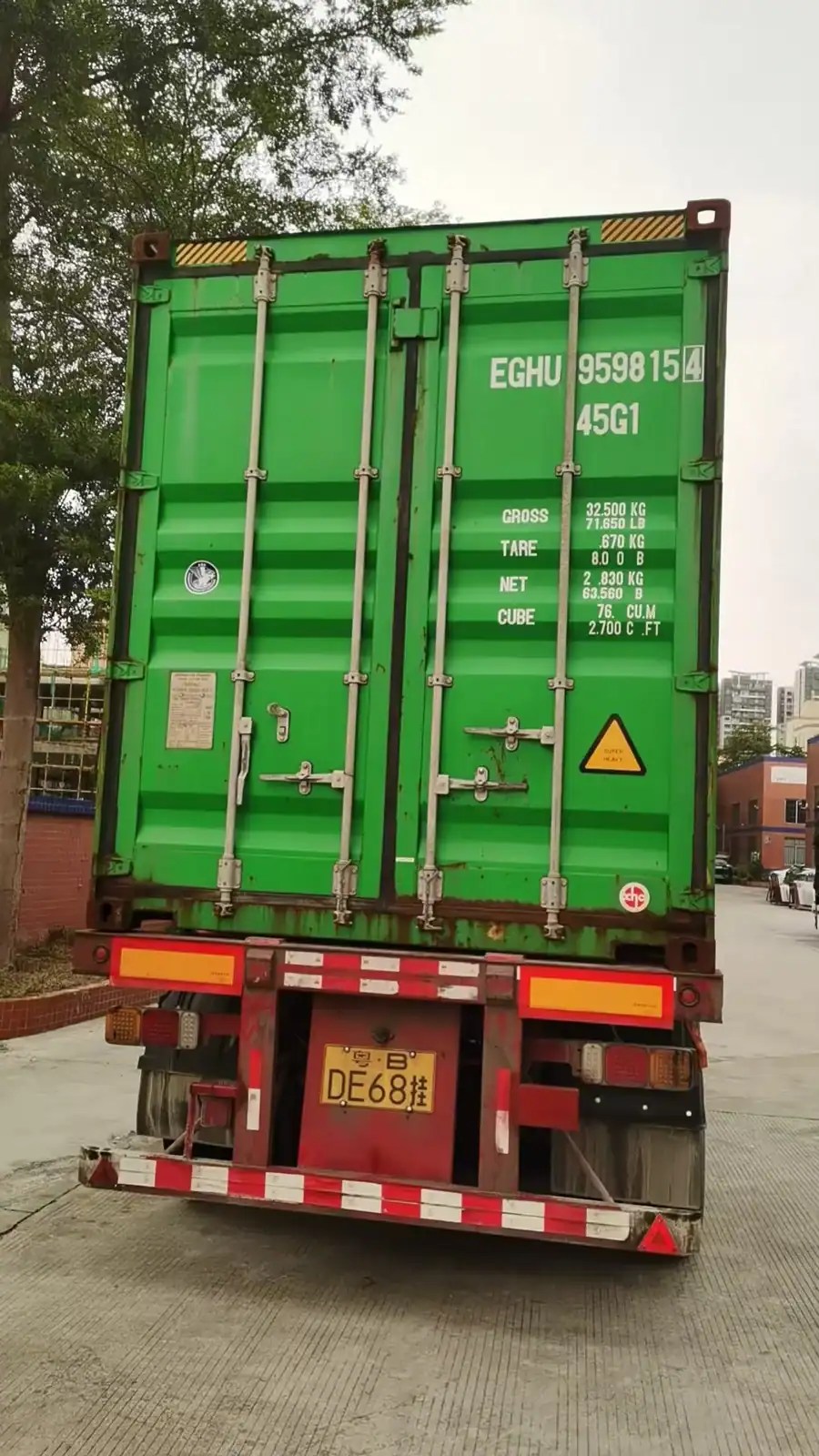
A full container was the right call for three reasons. It removes the shared-handling risk of consolidated freight — no cross-docking, no stacking under someone else’s pallets, no missing carton at destination. DDP terms put duties, customs clearance and final delivery on our side, so the client had nothing to file and nobody to appoint. And placement: furniture and greenery arrived together, so he could finish a room in one go instead of waiting on a second delivery to complete it.

What Arrived, and What Happened Next
The client was satisfied on delivery and said the finished result matched what he had pictured for the new home. That is the outcome we can document, and we would rather state it plainly than dress it up.

There has been no repeat order, and there was never going to be. He furnished one house, once. Private residential projects are one-time by nature, which is worth saying out loud because it changes what a sourcing agent is being judged on. With a wholesale client a mistake on order one gets corrected on order two. Here there is no order two — the sofa either matches the picture in his head or it sits in his living room not matching it for the next ten years.
What This Case Shows About Luxury Home Furniture Sourcing From China
The timeline is the part most buyers get wrong. Eleven weeks to confirm and eight to build is not a slow project — it is a normal one, and the ratio holds on most fully custom furniture orders. When a supplier quotes a 60-day lead time, that clock starts when the last specification is frozen, not when you place the order. Budget the confirmation phase separately or the delivery date slips by months while everyone insists they are on schedule.
High-end private buyers also aren’t negotiating the way a wholesale buyer negotiates. What they’re paying for is control over the finished result: the exact slab, the exact curve of a sofa back, the exact firmness of a cushion. Treating that iteration as normal production work rather than scope creep is most of what makes a project like this land. A supplier who resents the fourth revision round is the wrong supplier here, and it’s cheaper to learn that during factory selection than during production.
The same constraint that moves inspection forward also shapes the freight decision. With high-value one-off pieces a full container is usually right even when volume alone wouldn’t justify it — the cost of one damaged piece exceeds the freight saving. That is the same logic behind our 187-piece bar furniture container to Edmonton.
The part overseas buyers almost never anticipate is that natural stone isn’t a specification you can put in a purchase order. Fabric has a code. Paint has a code. A stone slab has a photograph and nothing else, and the only honest way to approve one is to look at the actual piece before it is cut. If a supplier can’t send you a video of the specific slab, they either don’t have it in stock yet or they don’t want you choosing.
FAQ: Luxury Home Furniture Sourcing From China
How long does it take to source custom furniture from China?
On this whole-house project it took about 11 weeks to confirm every specification and 8 weeks from confirmation to the container sailing — just over four months in total. Expect the confirmation phase to take as long as production, or longer, on fully custom pieces.
Can furniture from different Chinese factories be shipped in one container?
Yes. This order came from 19 factories and shipped as one full container. Suppliers deliver into a single warehouse, goods are counted against the packing list, then everything is crated and loaded together on one booking.
Can a factory match a custom stone tabletop to a specific slab?
Yes, if you ask for it. Request video and multi-angle photos of the actual slab in stock, with measurements, before it is cut. Natural stone varies piece to piece, so approving from a sample chip tells you almost nothing about the table you’ll receive.
How is large furniture quality-checked if it can’t be reopened after crating?
Verification has to happen after production and before crating, normally over a live video call covering fabric, stitching, dimensions, structural stability and any stone surface. Once the timber frame goes on, opening a piece again risks more damage than the check would find.
What does DDP shipping cover for a furniture buyer?
Under DDP terms the seller handles export clearance, ocean freight, import customs, duties and final delivery. The buyer receives the shipment at their address without filing anything or appointing a broker.
Related Planning Guides
This case study describes one project and one set of dates. The guides below cover the repeatable parts of a whole-house furniture order.
- Buying a full house of furniture from China — the overall sequence: room schedule, supplier split, budget and how the timeline is built backwards from loading.
- Multi-factory furniture sourcing — holding one design language across factories that never speak to each other, which is what the 19 suppliers above required.
- Custom furniture approval checklist — the ten decisions to freeze before production starts. This is where the eleven weeks went.
- Furniture Quality Control Checklist — what to verify after production and before the timber crates go on, including the pre-crating video inspection used on this order.
- Mixed furniture container — handling classes, measured CBM and loading order when furniture, decor and greenery share one container.
Planning a Furniture Project Like This?
Whether it’s a whole-house custom order or a container of furniture for resale, we handle factory selection, design revision rounds, pre-crating inspection, consolidation across suppliers and DDP delivery on one line of communication.
If you’re planning a fully custom furniture project and want a China sourcing agent who can manage factory selection, revision rounds and container shipping end to end, start with a free sourcing trial or contact us directly.