Importing machinery from China to Mexico doesn’t always start with finding suppliers. The buyer in this case had already found his; the remaining problem was execution.
Four machines and several disposable-product orders had to be followed across different suppliers, checked before the machinery disappeared inside wooden crates, received into one warehouse, separated correctly and loaded into two high-cube containers for Mexico.
This is where a sourcing project can fail even after supplier selection. A purchase order does not coordinate production milestones. A finished machine can’t be fully verified once it has been crated. Separate suppliers don’t automatically use the same item names, package marks or delivery schedule. And a container plan is only reliable when the actual cargo, packing and documents agree.
Minden Intl took over the China-side coordination while the buyer kept the original supplier relationships and every commercial decision.
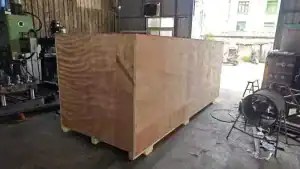
One of the four machines after its wooden export crate was built.
Project Snapshot
- Destination: Mexico
- Buyer’s starting point: suppliers already selected by the buyer
- Machinery: four machines from separate orders
- Additional cargo: paper bowls, baking paper and other disposable products
- Shipment: two high-cube containers
- Minden’s scope: supplier follow-up, pre-crating machine checks, warehouse receiving, cargo identification, consolidation, loading records and export-document handover
The value of the project was not finding a replacement supplier. It was creating one control plan across suppliers that were already in motion.
The Buyer Already Had Suppliers. He Needed Execution.
The client imports disposable food-service products into Mexico and also deals in machinery. What he didn’t have was a team on the ground to follow production, check goods before they were packed, consolidate everything into containers and hand over a consistent shipment record.
He kept the supplier relationships and approvals. We ran the China side. This is a large part of what a China sourcing agent actually does, and it has little to do with finding factories.
The First Risk: Every Supplier Had a Different Timeline
A supplier saying “almost finished” is not enough for a multi-supplier shipment. One late machine can affect inspection, crating, warehouse arrival, container booking and the delivery schedule of every other order.
We converted the separate supplier updates into one shared milestone view:
- production status;
- expected completion date;
- earliest safe inspection date;
- test or function-check availability;
- crating date;
- package dimensions and gross weight;
- planned warehouse arrival;
- documents and accessories still outstanding;
- exception owner and next action.
The purpose was not to ask every supplier for the same lead time. It was to see early which dependency could delay the complete shipment, and escalate it before it did.
Why the Machinery Had to Be Checked Before Crating
A wooden crate protects a machine during handling, but it also hides the areas a buyer may need to verify. Once the crate is closed, reopening it adds cost, time and damage risk. The practical checkpoint was therefore before final crating.
For each machine, the China-side check focused on what could still be confirmed at that stage:
- machine identity and model reference;
- visible configuration against the approved order;
- nameplate information where applicable;
- dimensions and main components;
- accessories, tools and loose parts;
- guards, panels, cables and connections visible before packing;
- operating or function evidence available from the supplier;
- manuals and packing lists;
- visible damage, missing parts or unresolved changes;
- photos and video tied to the correct machine and supplier.

A printing machine photographed at the factory before its crate was built.
The exact test depth depended on the machine, the supplier’s setup and the buyer’s approved specification. This was not a substitute for a technical factory acceptance test or a destination-market conformity assessment. It was a controlled verification point before the equipment became inaccessible. For a wider explanation of inspection scope, see our guide to product quality inspection in China.
Crate material is worth confirming at the same stage. Solid-wood packaging may fall under ISPM-15 treatment and marking rules, so check the exact crate material and the current requirements with the supplier and your broker before the crate is built.
One Approved Reference for Every Machine
Supplier names alone are not a reliable cargo-control system. The working file linked each machine to a buyer-approved reference:
- buyer item number;
- supplier order reference;
- machine description;
- model or configuration;
- quantity;
- accessories;
- photo reference;
- crate number;
- package dimensions and gross weight;
- inspection status;
- document status.
If a supplier changed a component, accessory or packing arrangement, the change had to be recorded against that reference. A general message such as “machine completed” was never accepted without knowing which configuration had actually been prepared.
Coordinating Machinery and Disposable Products
The shipment did not contain machinery alone. Paper bowls, baking paper and other disposable products also had to arrive, be identified and remain countable before loading. The two cargo types needed different controls.
Machinery
The priority was identity, configuration, accessories, pre-crating evidence, crate condition, dimensions, weight and safe loading orientation.
Disposable products
The priority was SKU, carton count, inner pack, outer-carton identification, visible carton condition and reconciliation against the order.
The two groups could share a shipment only after their records were compatible. A machine crate can’t be treated like a carton SKU, and small cartons can’t go wherever space appears without considering access, crushing and load stability.
Warehouse Receiving: Where Supplier Claims Meet Physical Cargo
The warehouse was not just temporary storage. It was the point where supplier claims were compared with physical arrivals.

Two of the crated machines on the way from the factory to our warehouse.
For each delivery, the team recorded:
- supplier;
- buyer item or SKU;
- package or crate count;
- visible package condition;
- shipping mark or project identifier;
- dimensions and weight provided;
- arrival date;
- missing, extra or unclear items;
- location in the warehouse;
- photo record.

Paper bowl cartons opened for identification at receiving.
Any mismatch had to be resolved before loading. Discovering an unidentified carton during container loading is too late to work out which supplier sent it or which order it belongs to. The detailed multi-supplier workflow is covered in how to consolidate products from multiple suppliers in China; this case only shows how that control was applied to one machinery project.
Shipping Marks Were Project Identifiers, Not a Legal Shortcut
The project used clear package identification so the buyer, the warehouse and the loading team could connect each crate or carton to the correct order. A useful project mark can include:
- buyer or project reference;
- item or machine reference;
- package number;
- destination;
- gross and net weight where confirmed;
- dimensions where confirmed;
- handling information agreed for the cargo.
This does not replace the importer’s legal labeling, customs or product-compliance responsibilities. Requirements depend on the product, HS classification, destination use and current Mexican rules, and the Mexican importer and customs broker should confirm the required documents and markings for the exact shipment. On another Mexico order, gift bags for a Mexican buyer, per-piece Spanish import labels shaped the packing plan in the same way: the broker set the requirement, and the China side made sure the cargo matched it.
For the general purpose of package identification, see what a shipping mark is. Don’t copy generic mark wording into a live shipment without buyer and broker confirmation.
Building the Two-Container Loading Plan
The final cargo was organized into two high-cube containers. The loading plan used the actual package information recorded at receiving, not early supplier estimates. The team considered:
- crate and carton dimensions;
- gross weight;
- machine orientation and handling needs;
- whether cartons could bear load;
- access needed during loading;
- separation of easily damaged items;
- package identification;
- photo and video records during loading;
- final package and document reconciliation.

Loading in progress; photos and video went to the buyer as the container filled.
The objective was not a mathematically perfect fill rate. It was to load the approved cargo safely and keep the physical shipment traceable to the working file. Both containers were booked through our container shipping from China service.
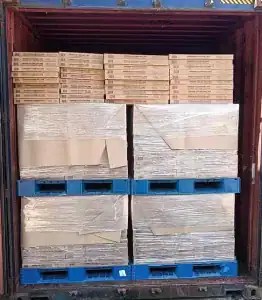
Palletized baking paper in one of the two high-cube containers.
Document Handover Before Departure
A multi-supplier shipment can be physically complete while the document set is still inconsistent. Before handover, the working records had to reconcile the cargo description, package count and the parties involved in the export process.
The buyer and his customs broker remained responsible for confirming the import requirements with Mexican customs for the exact machines and disposable products. Our role was to organize the China-side supplier and shipment information so missing or conflicting details could be found before departure.
No article can determine a Mexican tariff, permit, standard or tax treatment without the exact product, HS classification, technical specification and current official requirements.
The Result
The four machines and the disposable-product orders were coordinated into two high-cube containers. Each machine had a recorded pre-crating checkpoint, warehouse arrivals were tied to the project file, and loading evidence was kept for the buyer.
The control plan was set up to coordinate inspection, packing, and split shipment across the four units. How a similar plan would work for another order depends on that order’s equipment, suppliers, and shipping schedule.
The main lesson is simple: when a buyer already has suppliers, local support in China can still be valuable. The work shifts from supplier discovery to production follow-up, pre-crating verification, exception control, consolidation and shipment handover.
What a Buyer Should Prepare for a Similar Project
Before asking a China-side team to take over, prepare:
- supplier names and contacts;
- purchase orders and payment status;
- product specifications and approved changes;
- machine model and configuration;
- required test or function evidence;
- accessories, manuals and spare-part lists;
- expected completion dates;
- packing requirements;
- destination and customs-broker contact;
- planned shipment window;
- instructions on who may approve changes.
The earlier this information is normalized, the easier it is to see what is missing and which supplier is on the critical path.
Checklist: 8 Questions to Answer Before a Machine Is Crated
- Is the machine identity tied to the purchase order and approved configuration?
- What can be safely operated or demonstrated at the supplier?
- Which accessories, tools, manuals and loose parts must be present?
- What evidence is required before the crate is closed?
- Are crate dimensions, weight and lifting points confirmed?
- Has the buyer approved every recorded change?
- Who decides whether an unresolved issue blocks crating?
- Does the destination broker have the information needed to assess import requirements?
A “finished” message from a supplier is not an answer to any of these.
Need China-Side Coordination After Choosing Suppliers?
We can work with suppliers you have already selected. The starting point is not a promise to replace them; it is a review of your order file, production status, open risks and shipment plan. Send your purchase orders, supplier list, machine specifications, expected completion dates, destination and required scope. We’ll tell you what can be checked in China, what still needs your or your customs broker’s confirmation, and where the critical path sits right now.
FAQ: Importing Machinery from China to Mexico
Can Minden manage suppliers that I found myself?
Yes, when the suppliers and project information can be shared and the responsibilities are agreed. The scope may include follow-up, sample or production checks, warehouse receiving, consolidation and shipping coordination. Commercial approvals remain with the buyer.
When should machinery be checked before shipping?
The inspection point depends on the machine and the contract, but the buyer should decide before final crating what must be demonstrated, measured, photographed or documented. Some checks can’t easily be repeated once the crate is closed.
Is a pre-crating check the same as a factory acceptance test?
No. A factory acceptance test follows a product-specific protocol and may require technical specialists, defined test conditions and signed acceptance criteria. A pre-crating check can confirm identity, visible configuration, accessories, available function evidence and packing readiness, but its scope must be stated accurately.
They may, when the products, packing, documents, handling, weight distribution and destination requirements allow it. The decision should rest on actual cargo data and broker or carrier requirements, not on unused space alone.
Who confirms the requirements for importing machinery into Mexico?
The Mexican importer and its customs broker should confirm current classification, documentation, permits, taxes, standards and labeling for the exact machine and its use. China-side suppliers and coordinators provide technical and shipping information but should not replace destination-country professional advice.