Figuring out how to import furniture from foshan china means bridging the gap between showroom prices and factory-floor realities. Foshan is the largest furniture manufacturing hub in China, but managing the process successfully demands careful attention to logistics, quality, and supplier transparency. This guide walks through the entire journey, from choosing the right market district to getting a finished container safely to your door.
Key Takeaways
- Visit specialized furniture districts in Foshan for better pricing and wider selection.
- Always prioritize factory-direct verification over showroom-only contact to avoid middleman markups.
- Negotiate MOQs based on total project volume rather than individual unit counts.
- Implement strict QC protocols to verify structure and durability before container loading.
- Utilize professional consolidation services to optimize container space and protect high-value goods.
- Knowing how to import furniture from Foshan China legally starts with verified export licenses and correct HS codes.
Foshan is the heart of China’s furniture manufacturing, often overwhelming for first-time buyers due to its vast network of showroom cities. Success depends on moving away from top-tier retail displays toward the specialized industrial zones where actual manufacturing decisions occur. Buyers often find that sticking to a single market district keeps logistics predictable and quality consistent.
Identifying the right furniture district for your specific style
Shunde and Lecong operate as the most significant hubs, but each district specializes in unique segments ranging from high-end European replicas to modern minimalist production. Focusing your efforts on one or two dedicated zones prevents the fatigue that cloud buyer judgment during long selection days. Our team often sees buyers lose time by visiting too many dispersed showrooms without a predefined style anchor.
Avoiding common price gouging tactics at showroom outlets
Showrooms in high-traffic commercial zones carry significant rental costs, which frequently inflate final item prices beyond factory reality. You can protect your bottom line by watching for these specific red flags in pricing proposals:
- Excessive unit markup when purchasing single samples compared to volume orders.
- Vague “service fees” that do not define specific project tasks like packaging or inspection.
- Pressure to complete payments with non-official bank accounts.
- Unexplained tiered pricing that lacks justification based on material quality.
After identifying these potential traps, always insist on a breakdown of the ex-factory pricing to ensure your budget stays on track. A China furniture sourcing agent can request this breakdown on your behalf if you are not sourcing in person.
The necessity of local interpretation during complex negotiations
Language barriers and business culture differences often result in misunderstandings regarding technical specs or delivery dates. Having a local professional present ensures that the nuances of contract terms are clearly communicated, preventing later disputes over fabric swatches or wood stains. A local partner acts as an essential buffer between your requirements and the supplier’s initial sales pitch.
Managing the pressure of on-the-spot purchasing decisions
Market sales agents are trained to close sales immediately by creating false urgency around stock availability. Professional buyers learn to document everything photographed in the warehouse and request a formal quote rather than agreeing to a price on the spot. Taking the time to compare quotes back at the hotel often reveals significant price discrepancies that you would have missed in the excitement of a high-end showroom.
How to import furniture from foshan china
Learning how to import furniture from foshan china requires moving past the simple act of buying and focusing on the legal and logistical framework. Getting furniture from the interior markets to your port of entry is a multi-stage operation involving export rights and commodity coding. You must ensure your paperwork is flawless to avoid delays at the border, as furniture is often subject to strict regulatory scrutiny.
Verifying supplier business licenses and legitimate export rights
Not every factory has the legal clearance to handle direct exports, potentially leaving your cargo stranded at the port if the exporter is unauthorized. We always check the supplier business license and export filing status early, as relying on a middleman with fake credentials is a common source of supply chain failures for new importers. If a supplier refuses to provide their official registration, it is a sign to walk away.
Handling the documentation for international customs clearance
Correct packing lists, commercial invoices, and wood treatment certificates are non-negotiable for smooth transit. Incorrectly filed HS codes for items like upholstered sofas or solid wood tables can trigger immediate audits by customs authorities. Ensuring your documentation matches the physical cargo loaded into the container will save you thousands in storage fees and administrative penalties. You can cross-check codes directly on the official U.S. Harmonized Tariff Schedule before filing.
Determining the most cost-effective shipping Incoterms
Understanding your responsibilities is essential to avoid hidden costs when goods arrive at your destination. You should study Incoterms to determine whether an EXW or FOB arrangement better serves your needs. Each term shifts different portions of the risk and financial burden, so choose based on how much control you need during the departure phase.
Managing import duties and furniture-specific commodity codes
Every piece of furniture belongs to a specific category that dictates the duty rate applied by your home country. Misclassifying a complex statement piece as a generic category can lead to significant overpayment of taxes or, worse, penalties for duty evasion. Cross-reference your product list with official tariff schedules to maintain compliance.
Managing custom manufacturing and small batch production
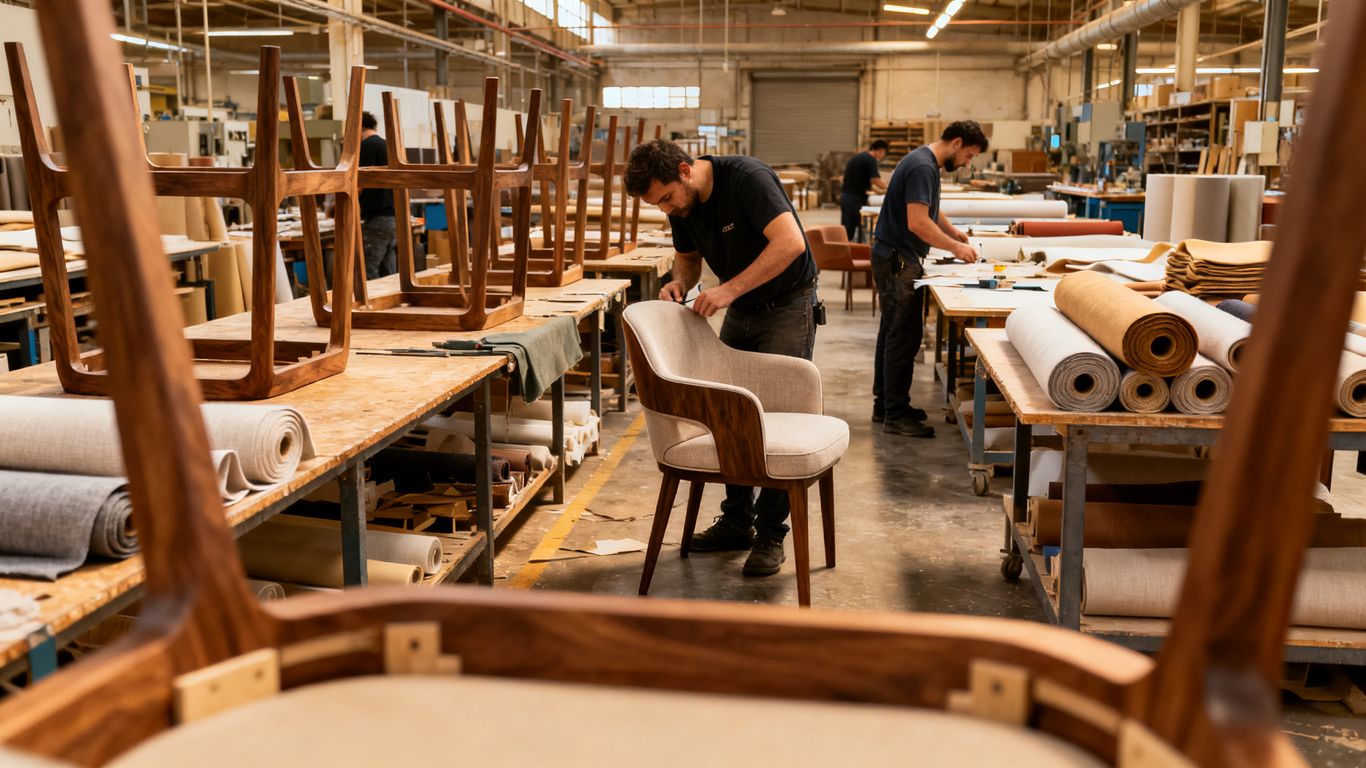
Custom furniture production is less about finding a perfect item and more about defining your technical requirements with total clarity. Factories expect exact blueprints or samples, so communicating these instructions poorly always leads to errors that appear only when the final batch is delivered. A China furniture sourcing agent can bridge this gap by documenting the exact specs, such as wood species, grain orientation, and finish sheen, which avoids mass production errors.
Communicating precise technical specifications to factory teams
Providing CAD drawings or physical material samples is the only way to avoid the “interpretation trap” where factories build what they imagine you want rather than what you ordered. Explicitly define what constitutes ‘acceptable’ and ‘unacceptable’ for fabric tension or joinery quality.
Understanding how to negotiate MOQ requirements for bespoke pieces
Many factories hold strict minimums for custom work, but these can often be negotiated if you align your order with their existing production cycles. Use the following breakdown when discussing quantity and cost expectations for bespoke furniture items:
| Order Type | Typical MOQ | Price Flexibility | Production Timeline |
|---|---|---|---|
| Stock Catalog | 5-10 units | Low | Fast (2-3 weeks) |
| Modified Design | 20-50 units | Moderate | Medium (4-6 weeks) |
| Full Custom | 100+ units | High | Slow (8-12 weeks) |
By grouping your order strategically, you can often reach the minimum threshold without needing to overbuy for a specific room or property project.
Managing realistic lead times for custom furniture builds
Lead times in China are rarely static and often expand during peak seasons like the weeks leading up to the Lunar New Year. We recommend adding a 20% cushion to any quoted delivery date, especially when coordinating multiple suppliers whose timelines must eventually converge for container loading. Planning for late arrivals prevents the scramble to rework your schedule once the production stalls.
Requesting essential prototypes before committing to mass orders
Never authorize a full run of bespoke furniture based solely on a digital render. Spending the money to have a single piece built allows you to physically test the seating comfort or drawer movement. If the prototype has a design flaw, you have caught it at the cost of one unit rather than a full container’s worth of failures.
Quality inspection standards for high-value furniture
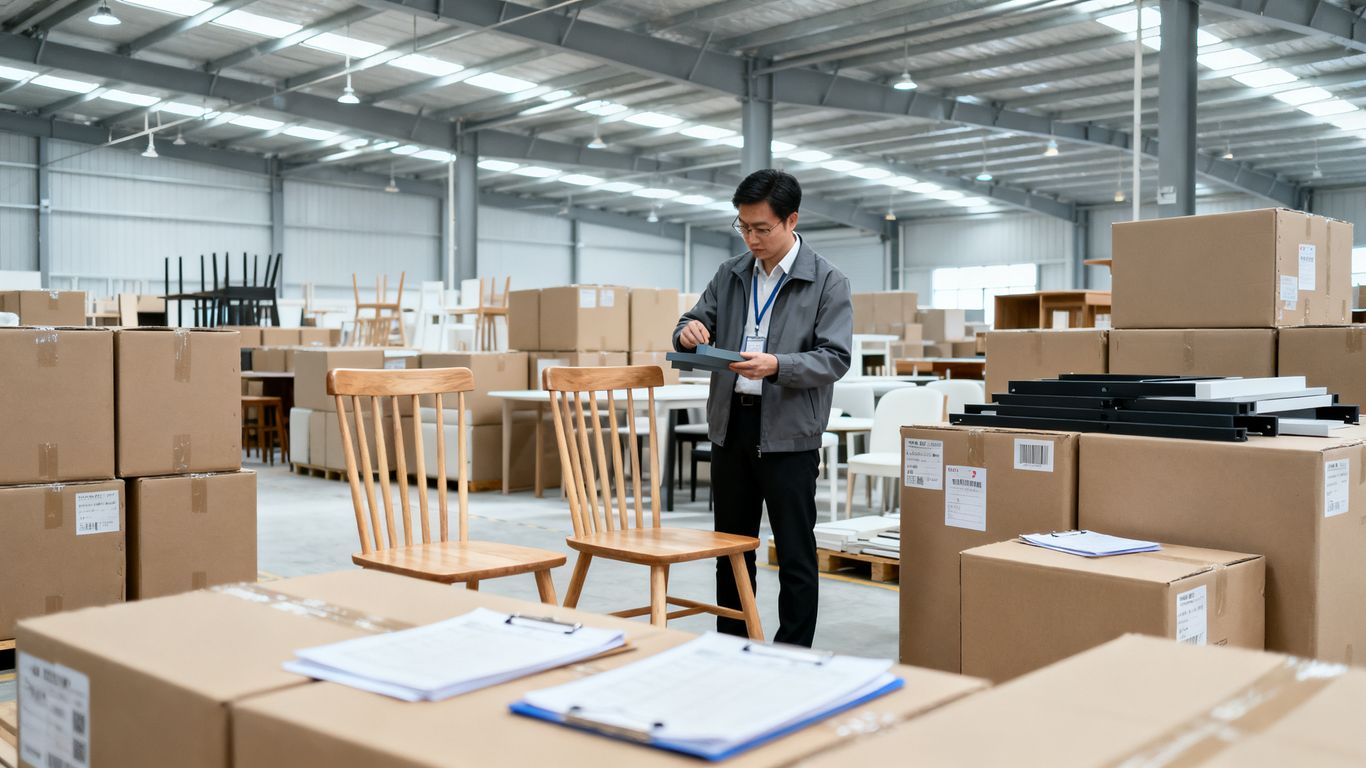
High-value furniture requires an inspection process that ignores surface aesthetics to look at the structural foundation. We check the internal frame materials and the quality of hidden joints rather than just looking at the fabric exterior. A lack of structural testing is the biggest mistake retail buyers make when sourcing from unknown factories.
Testing the long-term structural integrity and material durability
Structural failures rarely happen at the factory, so we simulate real-world usage through drop testing and weight-bearing trials. We insist on solid, seasoned wood rather than cheap processed alternatives that warp after a single season of climate changes. Ignoring these hidden elements ensures that your investment won’t hold up in the field.
When inspecting upholstery, check for even tension and proper seam management that won’t fray under pressure. We look inside the frame to ensure staples are properly spaced and that supporting webbing holds adequate tension. Substandard foam density or weak interior frames are common problems that only show up after a few months of daily consumer use.
Addressing surface defects, staining, and lacquer consistency
Surface finish consistency is often the most subjective part of the inspection, yet it is the first thing a customer perceives. We hold samples against the furniture in various lighting conditions to ensure stain, lacquer, or wood finish matches across the entire batch. Discrepancies in tint or gloss indicate poorly controlled finishing lines that often overlook quality lapses in other areas.
Capturing detailed photo documentation for remote buyer verification
Photos are your only record if a dispute arises later, making detailed documentation a core part of the inspection process. Our team captures images from every angle, focusing on joints, hardware installation, and the underside of pieces. These files serve as the definitive record to prove whether the items met your quality standards before they were sealed inside a container.
Consolidating and protecting furniture during transit
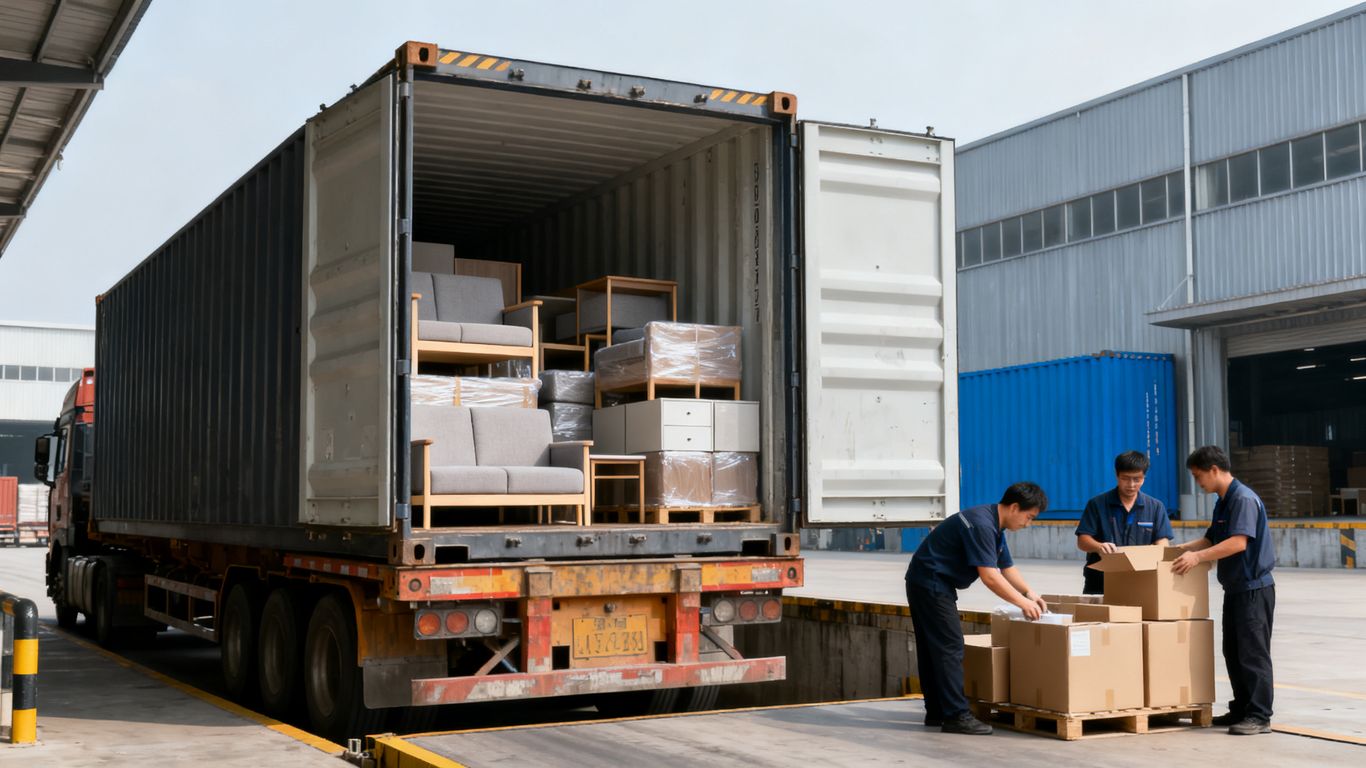
Furniture pieces are bulky, heavy, and disproportionately expensive to ship if you do not master the art of consolidation. Our approach with container shipping from China involves strategic planning so that fragile items and heavy loads occupy their own dedicated space without causing structural damage. Protecting the goods is not just about the quality of the box; it is about how the boxes are arranged during the loading process.
Choosing specialized packing materials for fragile items
Standard cardboard is insufficient for high-end wood or upholstered pieces that are destined for international sea freight. We mandate double-corrugated cartons, corner protectors, and moisture-absorbing silica packets for every shipment. Investing early in robust packaging prevents the most common damage claims involving crushed corners and chipped finishes.
Maximizing container space with mixed-furniture loads
Containers are expensive, so every available cubic meter must be used efficiently while avoiding over-stacking that damages the items below. By layering heavier cases at the base and placing larger, lighter items to minimize empty pockets, our team ensures the capacity is fully utilized. A poorly loaded container results in goods shifting during transit, which is a common cause of shattered joints and scratched surfaces.
Planning the container loading sequence to avoid pressure damage
Load order is everything; delicate items should never be wedged beneath heavy wood slabs. We plan the sequence so that the most durable crates support the weight of those above, ensuring that items are easily retrievable without unloading the entire container. Keeping this sequence logical simplifies the handling process on the other end to avoid accidental damage during warehouse intake.
Implementing mandatory fumigation protocols for wooden crates
International standards enforce strict fumigation for any solid wood packaging to prevent the spread of invasive species. Failing this simple step leads to your goods being seized, returned, or destroyed upon arrival at your national port. Our team ensures all crates bear the proper ISPM 15 stamp to confirm they meet global biosafety requirements before they ever leave the facility.
Resolving common supply chain risks in the furniture industry
Disruptions in the furniture supply chain are rarely isolated incidents; they are almost always the result of a chain reaction that starts weeks before the deadline. Managing these risks involves proactive monitoring of the entire production flow rather than waiting for an update from the factory. We focus on finding problems early so they don’t become budget-draining emergencies later.
Managing unexpected delays in textile and component sourcing
Sub-factories often run late with fabric or metal components, stalling your main production line without notice. We track the delivery status of all ancillary components to predict if the main build will be forced to wait. If a textile supplier is lagging, we move fast to source an alternative or push the factory to prioritize your line over less urgent projects.
Mitigating the impact of sudden supplier communication breakdowns
When a factory suddenly goes silent, it is almost always a sign of an internal management crisis or a complete production failure. Maintaining regular, open communication ensures that you receive warnings about potential problems before the supplier starts ignoring your calls. Having a direct line to the shop floor manager is your best insurance policy against mysterious silence.
Ensuring strict regulatory compliance for international safety standards
Safety laws for furniture are becoming more stringent worldwide, particularly regarding flame retardants and chemical off-gassing. We verify that each factory holds current test reports for your specific local requirements to avoid compliance roadblocks. A product that fails a safety check is an expensive waste that cannot be easily fixed or sold in major retail channels.
Developing contingency plans for manufacturing output issues
No production run ever goes perfectly, so we prepare a plan B for the inevitability of rejections or quality lapses. This might include maintaining a secondary factory connection or setting aside a small buffer of budget to rush-ship replacement components. Real-world sourcing is about anticipation; you should always know what you will do if the primary plan fails before it actually happens.
Conclusion
Importing furniture from Foshan is a practical, manageable endeavor for any business owner who treats it as a series of operational logistical steps rather than a one-time purchase. Once you understand how to import furniture from foshan china, success remains rooted in your ability to visit or hire local experts to verify factory conditions, manage packaging, and coordinate the precise timing of your shipping containers. By focusing on these granular details, you bypass middleman markups and bring your project to life exactly as you intended, without the common surprises that plague less prepared buyers.
Let Us Handle All Your China Import Work
Whether you’re building custom exhibition furniture or sourcing other wholesale products, our experienced sourcing team handles everything from design review and sample making to bulk order contracts, inspection, and final delivery.
Frequently Asked Questions
What are the first steps to learn how to import furniture from Foshan China?
Start by choosing a specialized market district, verifying supplier export licenses, and confirming HS codes for your product category. Visiting in person allows you to verify material durability and finish quality firsthand, which digital marketplaces cannot replicate. It also lets you build a direct relationship with factory managers, which is often the only way to lower production costs and ensure accurate technical understanding of your custom furniture designs.
Is it affordable for a small business to consolidate furniture from multiple suppliers?
Yes, provided you work with a professional consolidation agent who can aggregate smaller orders into a single container. This strategy is precisely how small retailers avoid the costs of multiple LCL shipments by pooling their inventory under one FCL bill of lading, significantly reducing landed costs per unit.
How can I ensure the wooden furniture I order won’t warp once it arrives?
Ensure that your factory specifically uses kiln-dried wood that has reached the proper moisture content for your home country’s climate. Furniture manufactured in high-humidity areas, if not dried correctly, will inevitably warp once it lands in a drier climate, so strict inspection as part of the manufacturing agreement is highly recommended.
Do I need to be present at the factory during the quality inspection process?
It is not strictly necessary as long as you hire a qualified China sourcing agent to handle the checks on your behalf. A third-party inspector who knows the technical standards and understands your specific quality requirements can provide the same level of verification as a physical visit, including video and photo evidence.
Many buyers overlook the costs of ISPM-15 compliant packaging, inland transport fees for getting goods to a major port, and import duties calculated on the landed price of the goods. These expenses, when combined, can shift your total project cost significantly, so requesting an inclusive quotation early is the best way to keep your budget realistic.
Can factories in Foshan handle custom branding and private labels?
Yes, most major factories in the Foshan industrial zone are well-equipped to manage OEM and ODM projects, including branding, custom packaging, and specific design requests. Clear communication via blueprints and defined branding guidelines is standard practice to ensure your finished pieces arrive with the correct logos and packaging materials as specified.
What should I do if my furniture arrives in a damaged condition?
The first step is detailed photo documentation of the damaged crates and the individual furniture items, which you should submit to your freight insurance provider immediately. This is why having comprehensive China sourcing services helps; a well-structured shipping agreement and a reliable, insured freight carrier are your primary defenses for when issues occur during international transit.