The decision to consolidate products from multiple suppliers in China usually starts with a mess that looks like this. A buyer places five purchase orders in one month, each with a different factory in a different city. Production finishes on five different dates, so inspection means five separate trips.
Nobody gave the factories a shared receiving address, so each books its own truck to its own port. Five document sets, five customs entries, five arrival dates — for goods one customer expects to receive together.
To consolidate products from multiple suppliers in China means routing every order into one warehouse, where quantities are verified against the purchase order, goods are inspected, cartons are repacked and relabeled where needed, and the whole lot ships under a single booking.

Cartons from several suppliers being loaded into one container at our Yiwu warehouse.
It does not pay in every case. Warehouse receiving, storage on early cargo, re-packing labor, and one factory running well behind the others can absorb the entire freight saving. What follows is how to tell the difference before you commit.
What It Means to Consolidate Products From Multiple Suppliers in China
Cargo arriving from several cities across several weeks has to be received, stored, and handled before any of it can be exported. Warehouse, trucking, storage, and re-packing charges all have to be measured against the cost of shipping each order separately.
The offsetting gain is control: one cargo plan and one handover replace a tracking number and document set for every purchase order.
Order Profiles That Benefit Most
Consolidation fits small and medium importers buying complementary products from different factories: a core product, its packaging, inserts, and accessories may each come from a different supplier while the customer expects them together.Retail buyers deciding what belongs in the range before any of that starts can read how to source mixed products for a retail store.
It also suits a buyer building a mixed container from the Yiwu wholesale market, where many small orders need checking and grouping before export. If you want the sourcing side handled on the ground as well, Minden Intl’s Yiwu market agent service covers booth-level buying and negotiation.

Cargo from different suppliers staged on separate pallets, grouped by purchase order before inspection.
The economics turn when separate shipments would each be billed as a small LCL movement. One warehouse receipt costs more locally, but it avoids repeating handling minimums, export paperwork, and port fees on every single order.
Whichever route you take, fix three things in writing first: who receives the goods, who pays domestic transport, and who owns the documents.
Situations Where Consolidation Adds Cost, Not Value
Consolidation is a poor fit when one order already fills a container, when suppliers finish months apart, or when the first cartons would sit in storage waiting for a late batch. Perishable, hazardous, oversized, and regulated goods usually need separate treatment rather than being mixed to fill space.
It is also risky when the specification is not fixed. Cartons arriving with different labels or incompatible packing turn the warehouse into a sorting room for decisions that were never closed — an upstream problem consolidation will not fix.
Step-by-Step Consolidation Workflow
A China shipment consolidation plan starts before the first supplier dispatches a carton. The buyer needs a receiving address, a target shipping date, a list of expected goods, and a rule for late or damaged arrivals. Without those, a warehouse can receive cargo but cannot decide whether it is ready to load.
Set the Rules Before You Place the POs
Give each supplier the same receiving instructions: warehouse address, contact person, carton markings, purchase order number, expected carton count, ready date, and delivery deadline. Ask for carton dimensions and gross weight before dispatch, not after the truck has left. A window with a fixed closing date beats an open-ended promise to wait; how long it runs depends on your own suppliers’ production spread, not on a standard figure.
Keep one order register: supplier, SKU, ordered and packed quantity, carton count, estimated CBM, inspection status. Set a cut-off date for late cargo, and decide in advance whether missing it means shipping separately, waiting with a storage charge, or coming off the load.
That register is the backbone of the whole shipment. Our guide to planning a mixed-SKU container from Yiwu sets out the field structure in detail — SKU master list, carton rules, and how to track CBM as a working range rather than a single figure.
Align Suppliers on Delivery Terms and Domestic Freight
Write the Incoterms rule into each purchase order, because “shipping included” means different things to different factories. Clarify whether the supplier delivers to the warehouse, whether pickup is arranged separately, and whether domestic freight sits inside the quoted price. When suppliers use different terms, compare the cost to the warehouse door, not factory prices alone.
Ask every supplier for a dispatch notice with truck details, carton count, and final packing list, so the receiving team has something to check against.
Inbound Receiving, Recording, and Quantity Verification
This is where separate purchase orders become one accountable shipment. Log each arrival before it is stacked away, with photographs of carton condition and marks. A record that says “goods received” is not enough when the load holds cartons from several factories.
Quantity verification does not mean opening every retail unit. It means agreeing an inspection level, checking carton counts, confirming labels, measuring selected cartons, and escalating discrepancies while the supplier can still fix them.
The gap between what a factory reports and what arrives is the most common problem we handle at receiving, and it is rarely dishonesty. A line runs a few cartons over, a packer switches to a larger box, someone adds protective material — and the CBM the buyer priced the shipment on is no longer the CBM going into the container.
Pre-Shipment Inspection, Sorting, and Relabeling
Inspection follows the product risk and the purchase order, not a glance at the outer carton. Agree the sampling method and acceptance rule in writing before production starts, and draw the sample across the lot, not from whatever sits nearest the door. Fragile items and goods carrying compliance documents deserve a tighter rule.
Sort cartons by SKU, purchase order, and loading priority. Relabel only when the new mark is approved and recorded — changing a label without updating the packing list creates a second problem. The same applies to a change in retail packaging found at this stage. Record damaged cartons, missing pieces, mixed SKUs, and re-packing materials used.
Document Reconciliation, Loading, and Handover
Before loading, compare supplier packing lists against the warehouse register and the final commercial invoice: cartons, units, gross weight, CBM, and the product descriptions and HS codes used for export paperwork. Differences are common when a factory reports estimated packing data and the warehouse later measures the cartons.
| Checkpoint | Supplier record | Warehouse record | Action if different |
|---|---|---|---|
| Carton count | Packing list total | Physical count | Hold and investigate |
| Unit quantity | Packed quantity | Sample or full verification | Request correction or approval |
| Carton size | Estimated dimensions | Measured dimensions | Recalculate CBM |
| Product marks | Factory labels | Approved shipping marks | Relabel and document |
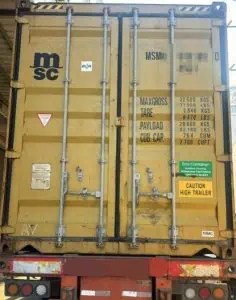
Container doors closed after loading; seal number and loading photos go into the shipment record.
Load by weight, stability, unloading sequence, and product compatibility rather than filling empty gaps; the IMO/ILO/UNECE CTU Code sets out the accepted practice. Keep the seal details, loading photos, final documents, and handover time — those records are what you use when a destination count does not match the origin record.
FCL vs. LCL vs. Mixed Container
Consolidation and LCL are related but not identical. Consolidation is combining goods from different suppliers; LCL is a sea-freight movement using less than a full container. A consolidated shipment can fill an FCL, or move as LCL.
The Four Variables That Decide the Choice
Start with usable volume, not the supplier’s estimate, then compare delivery date, cargo characteristics, and destination cost structure. The same volume can be a sensible LCL load in one lane and a poor choice in another.
| Variable | FCL tends to suit | LCL tends to suit |
|---|---|---|
| Volume | Larger, denser loads | Smaller loads below container capacity |
| Timing | Orders ready within one loading window | Cargo that cannot fill a container yet |
| Cargo risk | Fragile or contamination-sensitive goods | Standard, compatible packed goods |
| Destination charges | One container delivery and clearance plan | Shared handling and possible deconsolidation |
Where LCL Gets Expensive and What a Mixed Container Buys You
LCL gets expensive when the same fixed activities repeat across several small shipments: each supplier generates its own pickup, receiving record, export document set, and handling event. Combining them turns scattered cargo into a mixed container with fewer international movements, provided the goods are ready inside the window.
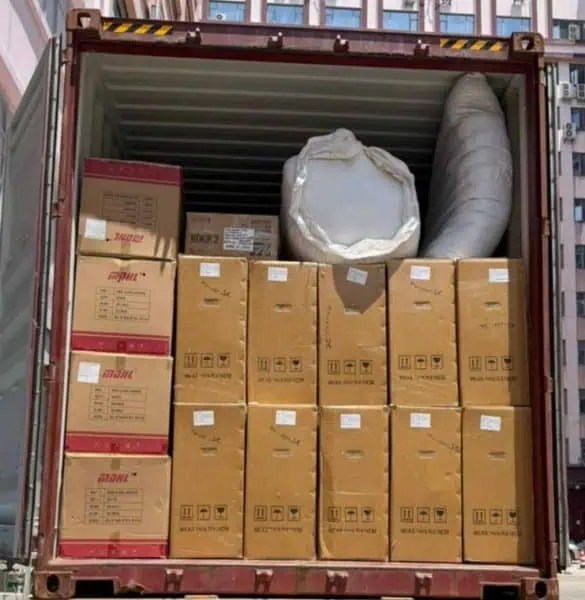
A mixed container part-loaded — cartons and woven bags from different suppliers going in on one plan.
A mixed container also buys visibility: which supplier is late, which cartons are over volume, which order needs correction before loading. Our mixed hardware container case covers the pressure points when a 20ft load has to be built from twenty-plus SKUs: planning, CBM tracking, and warehouse inspection.
What Consolidation Costs — and Where the Risk Sits
The cost of consolidation is more than the ocean freight line. Ask for every origin, handling, and destination charge as a separate line, especially when comparing a partner quote against supplier-arranged freight.
Risk scales with supplier count. Every extra purchase order is another chance for a late delivery, a wrong carton mark, or a quantity discrepancy.
Quality and Documentation Controls Across Multiple Suppliers
Set acceptance rules before production begins and keep the evidence at the warehouse: approved samples, inspection photos, packing lists, carton measurements, discrepancy approvals. If a supplier’s cartons hold a different SKU or the CBM shifts materially, record the decision to rework, hold, or ship rather than quietly adjusting the invoice.
A cost sheet for a small or medium order breaks down to:
- Domestic pickup or supplier delivery to the warehouse
- Receiving, counting, inspection, and storage charges
- Re-packing, palletizing, relabeling, or special handling
- Export documentation, loading, and origin charges
- Ocean, air, destination, customs, and final-delivery costs
Priced line by line, you can tell a real freight saving from a charge that has moved into warehouse handling.
Common Mistakes Importers Make
Placing orders without a shared ready-date plan. Factories deliver whenever production finishes, and the buyer pays storage or misses the sailing. Set the window and the late-cargo rule before deposits are paid.
Treating consolidation as a substitute for inspection. A full container can still hold shortages, mixed SKUs, or missing documents. Fixing a discrepancy in a Chinese warehouse is cheaper and faster than fixing it at destination.
Comparing factory prices instead of cost to the warehouse door. Two quotes that look ten percent apart can land the other way once domestic freight and delivery terms are included. Ask every supplier for the same delivered basis before comparing.
Relabeling or repacking without updating the packing list. The cartons and the paperwork stop matching, and the problem surfaces at customs instead of the warehouse. Every mark change needs an approval and a document revision on the same day.
When to Use a China Sourcing and Consolidation Partner
A partner earns its fee when the buyer has several suppliers, limited Mandarin communication, moving production dates, or no reliable receiving point in China. Someone has to collect updates, receive cartons, measure CBM, inspect goods, and build the shipment record — the same coordination a China sourcing agent does upstream, applied at the point of export. A buyer who already has a trusted warehouse and a disciplined logistics team may not improve on it.
Decide on workload and exposure, not on a low headline freight rate. Ask what happens when goods are late, quantities do not match, or the final volume exceeds the estimate.
When It Is Worth It — and When It Is Not
Worth considering when the supplier list is long enough that coordination becomes a job in itself, when orders sit below full-container volume, or when several categories have to arrive together.
Probably not worth it for one stable supplier, one full container, or a time-critical order that cannot wait. Ask for a side-by-side comparison — separate shipments, consolidated LCL, mixed-container FCL — with all origin and destination charges included.
An experienced operator will sometimes tell you not to wait. If the recommendation is always to consolidate, the commercial incentive is driving the logistics decision.
How Minden Intl Runs Multi-Supplier Consolidation
Minden Intl is a China sourcing and logistics agent with offices in Yiwu and Guangzhou and our own consolidation warehouse. We have worked in foreign trade for many years and ship for buyers around the world — Amazon sellers, wholesalers, retailers, and small brands. We source, inspect, consolidate, and ship. We are not a manufacturer, not a wholesaler, and not a trading company.
The heaviest job we have written up ran to more than thirty suppliers in one container for a US buyer. Very little of that work was freight. It was chasing ready dates, re-measuring cartons that did not match the quoted dimensions, and holding the load plan open until the last supplier delivered. The Yiwu full-container case has the detail.

The consolidation floor where separate purchase orders are received before becoming one shipment.
Orders come into our warehouse, get recorded and inspected against the purchase order, then load into one container on the agreed plan. Our container shipping from China page covers the FCL, LCL, and export documentation side once the load is ready.
This does not make every order on time or defect-free. It creates a control point before export, where a shortage or a volume change can still be dealt with while the supplier is in reach.
Conclusion
Most attempts to consolidate products from multiple suppliers in China fail for one reason: the rules were set after the cargo arrived instead of before production started. The receiving window, the carton-marking standard, the late-cargo rule, and the order register cost nothing to write into a purchase order, and are expensive to retrofit later. Minden Intl’s China shipment consolidation service page sets out what a receiving check covers and what has to be booked separately.
Not sure whether consolidation fits your shipment?
Send Minden Intl your supplier count, product categories, destination country or port, and estimated volume in CBM or cartons. We’ll come back with a side-by-side comparison — separate shipments, consolidated LCL, and mixed-container FCL — with origin and destination charges shown as separate lines.
Have suppliers finishing on different dates and no receiving point in China? Send Minden Intl the order list and we’ll tell you whether one container is the right answer — including when it isn’t.
Frequently Asked Questions
What does it mean to consolidate products from multiple suppliers in China?
Collecting goods from several Chinese suppliers at one receiving point, checking the cargo there, and combining it into one planned export shipment.
Is consolidation the same as LCL shipping?
No. Consolidation is combining orders; LCL is a sea-freight method for cargo that does not fill a container. A consolidated load may move by LCL or, when large enough, as FCL.
How early should suppliers be told about consolidation?
Before production or dispatch begins — with the warehouse address, carton-marking rules, expected ready date, delivery deadline, and packing-list requirements.
What information should a receiving register contain?
Supplier, purchase order, SKU, ordered and received quantities, carton count, dimensions, gross weight, CBM, carton condition, and inspection status.
Yes, if the products are compatible, properly documented, securely packed, and acceptable under the destination country’s import rules. The loading plan should account for weight, fragility, and unloading order.
When does LCL consolidation from China make sense?
When several suppliers have smaller compatible orders and shipping them separately would repeat origin handling, documentation, and destination charges on each.
What should an all-in consolidation quote include?
Domestic transport, receiving, storage, inspection, re-packing, export handling, freight, destination charges, customs responsibilities, and final delivery — each as a separate line.