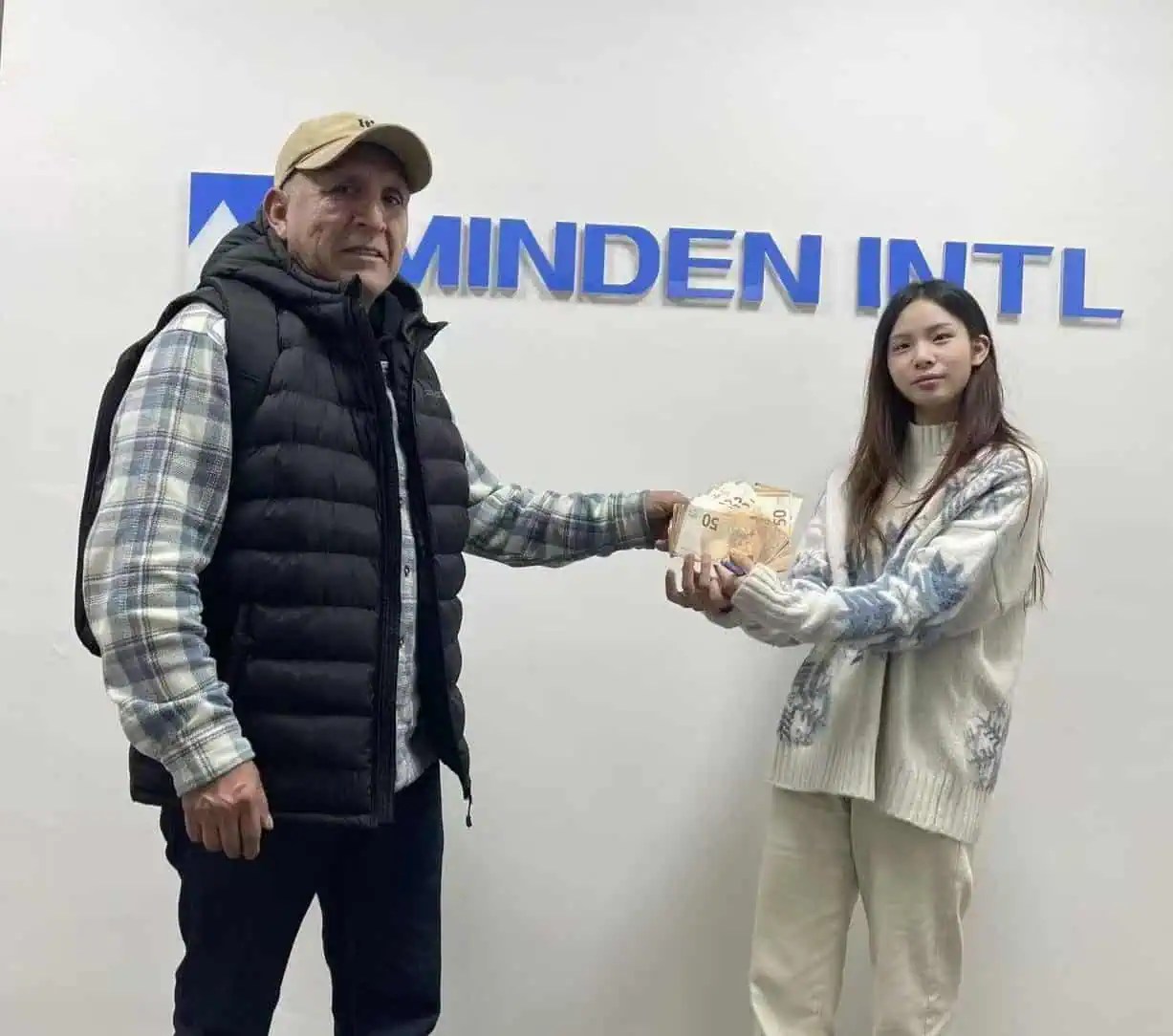
A UK charity football club manager came to us with a small order and a specific problem: the supplier he’d already picked couldn’t get the first pattern sample right. That’s not unusual when a buyer sources on their own for football kit sourcing from China — a factory that looks fine on paper doesn’t always deliver on the first cut. What made this case different was what happened next: a supplier swap, a color crisis, and an order that grew from 100 kits to 1,200 once a sponsor got involved.
A Community Club That Outgrew Its First Order
The client runs a community-based charity football club in the UK. For a club like this, football kit sourcing from China isn’t a side errand — it’s the difference between a training session in matching gear and one in whatever’s left in the kit bag. The club organizes public welfare matches and youth football training, and it’s run on a volunteer budget, not a commercial one.
The first order was 100 sets — small, cautious, typical of a first-time buyer testing a new supply chain. After the club landed a charity sponsor, matches and community events picked up fast, and the order grew to 1,200 sets. At that point, the club needed a supplier relationship that could hold up over time, not a one-off factory find.
Why the First Pattern Never Made It Off the Cutting Table
The client had already chosen a supplier before contacting Minden — a common situation with buyers who’ve done some legwork on Alibaba or through a contact, but haven’t inspected a factory in person. The first pattern sample from that supplier wasn’t usable. This happens more than most first-time buyers expect. A factory can quote a fabric weight and a print method correctly and still miss on cut quality, especially on a design with panel seams and a contrast stripe, which this kit had.

The finished 01 Sports Club kit, folded and checked before packing.
We took the fabric sample the original supplier had already produced and used it as the benchmark, then sourced an alternative maker on 1688.com who could reproduce the same fabric. The new quote came in lower than the original supplier’s price — not because the fabric was cheaper, but because the original supplier’s pricing had padding the alternative didn’t need. That’s a pattern we see often: the first quote a buyer gets isn’t usually the best one available for the same spec.
The Color Didn’t Match, Even With a Reference
Color is where this order nearly stalled. The client had provided a reference image for the kit’s navy and gold tones. The factory’s first sample, dyed using standard methods, showed a clear color difference from that reference — a material and dye interaction problem, not a factory mistake in the usual sense. Dye lots vary, and matching an exact shade across a synthetic performance fabric is harder than matching a printed color on paper.
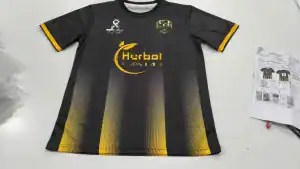
A second reference sample in a flat color layout, shown alongside the gradient piece to demonstrate the print method’s range.
The fix was switching from dye-based coloring to digital sublimation printing. That solved the color-matching problem and actually lowered the cost. It came with a tradeoff, though — sublimation printing on this fabric produced a slightly less vibrant color than dye. We told the client that directly instead of letting them find out after the shipment landed. He thought about it and chose color accuracy over vibrancy. That’s the kind of decision a buyer can only make well if someone tells them the tradeoff exists before production runs, not after.

Cut panels laid out on the fabric roll, with the color-swatch strip used to lock in the final navy and gold shades.

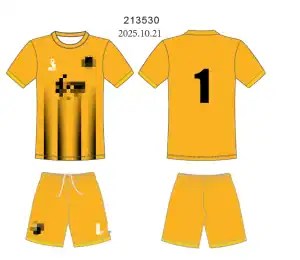
A second cutting layout showing the sponsor panel, with the printed logo blurred at the client’s request.
How the Team Logo and Sponsor Logo Got Locked In
Customization on this order meant two logos, not one: the club’s own crest and the sponsor’s logo, both supplied as PDFs by the client. We synced the size chart, fabric specs, and print-position diagram with the factory before any sample cutting started. Once both sides confirmed those details online, the factory produced a pre-production sample.
Start your projects in China.
- ✓Turn your ideas into production plans.
- ✓Flexible MOQs, factory-direct prices.
- ✓Quality consistency, stable supply
Because shipping a physical sample to the UK for approval would have added a week or more, the client agreed to confirm the sample from a video call showing the fabric and print up close instead. That’s a workaround worth knowing about if you’re sourcing on a timeline — a video sample check isn’t as thorough as holding the fabric, but it catches most of what actually goes wrong, and it saves real time.
A reference sample showing what digital sublimation printing does with a gradient stripe, used to explain the color tradeoff before production.
What the Inspection Found on the First 80 Sets
The first production batch was 80 sets. Inspection turned up two categories of issue: two sets with minor loose stitching threads, and three sets with logo print edges that had come out blurred. That’s a 3.75% defect rate on the batch — not catastrophic, but not something we let slide either.

Finished jerseys bagged and tagged by size, 116 for youth and 160 for older players, ready for shipment.
We photographed the defects and sent them to the client immediately rather than deciding for him what counted as acceptable. He was fine with the loose threads. The blurred print was a different story — that’s the kind of flaw a sponsor notices in a team photo.
When we raised it with the factory, they initially argued it fell within normal tolerance and weren’t willing to compensate. We pushed back with our own inspection standard: a 3.75% defect rate on branded print work isn’t something we accept as routine, regardless of what the factory considers normal. The factory agreed to either rework the flawed pieces — about a week of extra time — or discount the three defective sets. Given the club’s schedule, the client chose the discount.
Why Air Freight DDP Was the Only Option That Made Sense
Speed mattered more than cost on this shipment. The client needed the kits in hand for scheduled matches, so we shipped air freight under a DDP arrangement, quoted at 8–12 days door to door. The shipment landed at the client’s private address on day 10 — inside the window, no customs delay.
For buyers weighing shipping methods from China, air DDP costs more per kilogram than sea freight, but it removes the customs and duty-handling burden from the buyer’s side entirely, which matters when the person receiving the shipment isn’t an importer by trade. Under DAP or standard sea freight, that burden — declarations, an EORI number, duty payments — falls on the buyer instead, as GOV.UK’s import guidance lays out.
From 80 Sets to a 1,000-Piece Order in Progress
The client inspected the shipment on arrival and was satisfied with the fabric, the print quality, and how the kits were packed. That first 80-set order, placed last October, was followed by a sample order in November, a 100-set bulk order this April, and a second sample order in June — with a 1,000-set custom order now in progress. That order history is the actual proof point here: a charity club with a volunteer budget kept coming back, and the order size kept growing.
What This Case Shows About Football Kit Sourcing From China
Most buyers don’t realize that the supplier they find first isn’t necessarily the one they should stick with, even after a sample has already been made. Switching suppliers mid-process feels like a setback, but taking an existing fabric sample to a second factory on 1688.com for a comparison quote is a normal move — it’s not starting over, it’s using what you already have as leverage.
This is the part of football kit sourcing from China that surprises first-time buyers most: the leverage usually sits with whoever is willing to walk a sample around, not with whoever signed the first quote.
The color tradeoff on this order is also worth flagging for anyone customizing branded sportswear. Digital sublimation and dye printing are not interchangeable choices — one gives you exact color matching at a slightly flatter vibrancy, the other gives you richer color with more dye-lot variation risk. A buyer who isn’t told this upfront usually finds out only when the shipment arrives and doesn’t match the mockup.
On inspection, the number that mattered here wasn’t the defect count — it was who defined “acceptable.” Factories set their own tolerance thresholds by default, and those thresholds skew in the factory’s favor unless a buyer, or whoever is inspecting on their behalf, applies a separate standard and is willing to hold the line on it.
Let Us Handle All Your China Import Work
Whether you’re building custom exhibition furniture or sourcing other wholesale products, our experienced sourcing team can solve all your problems from design review, sample making to final delivery. Stop wasting time on unstable factories and repeated sample revisions.
FAQ: Sourcing Custom Football Kits From China
How much does football kit sourcing from China cost?
Cost depends on fabric grade, print method, and order size, but digital sublimation printing is often cheaper than dye-based color matching once you factor in reprints for color misses. Whatever your budget, football kit sourcing from China works best when you get quotes from more than one factory for the same fabric spec before committing.
What’s a realistic MOQ for a custom team kit order from China?
MOQs vary by factory, but many sportswear manufacturers will run smaller batches — well under 100 sets — for buyers willing to pay a slightly higher per-unit price. Growing the order over multiple rounds, as this club did, is a common way to keep early risk low.
Can Chinese factories match an exact color for sports jerseys?
Not always with dye printing, especially on synthetic performance fabric. Digital sublimation printing gives more reliable color accuracy, though it can look slightly less vibrant than dye. Ask which method a factory is quoting before you approve a color reference.
How long does DDP air shipping from China to the UK usually take?
Typical quotes run 8–12 days door to door under a DDP arrangement, which covers duties and customs handling on the seller’s side. Actual transit time depends on the shipping line and customs volume at the time.
Is 1688.com reliable for finding a football kit manufacturer?
1688.com has a large base of sportswear factories, including ones that can reproduce a fabric sample from another supplier. Reliability comes down to vetting the specific factory — checking their sample quality and production history — rather than the platform itself. For details on how sourcing via 1688 actually works, see our guide on the 1688.com agent process.
If you’re doing football kit sourcing from China for a club, team, or brand and want someone checking color, print quality, and stitching before it ships, you can start with a free sourcing trial or contact us directly.