Most importers worry about damage at sea or on arrival. But goods can also be damaged on the road between the factory and the port, before they ever leave China. When that happens, the first question is who carries the loss, and the answer depends on FOB risk transfer and the other Incoterms rules in your contract.
We saw this first-hand on a packaging order for a US client, when a semi-automatic sealing machine fell over inside a truck on its way to the port. This guide explains where risk passes under the common terms, using that case as an example.
What Happened: A Machine That Fell Before Export
The machine was built to the client’s US specifications and crated at the factory. During inland transport, the driver had not secured the crate. When the truck braked, the machine fell, bending several parts and breaking one.

Nothing had been loaded on a ship yet. The goods were still in China, on a Chinese road, with a Chinese driver. These were goods damaged before shipping from China, and whether that loss belonged to the factory, the buyer or the trucking company depended on which trade term had been agreed and who had arranged the truck.
FOB Risk Transfer: When the Goods Are On Board
Under FOB (Free On Board), the seller delivers the goods on board the vessel nominated by the buyer at the named port of shipment. According to the International Chamber of Commerce, risk transfers to the buyer once the goods are on board.
That means, under FOB, damage during the trip from factory to port, during export clearance or while waiting at the terminal is normally the seller’s risk. The buyer’s risk starts when the goods are on the ship.
How EXW, FCA and FOB Compare
| Term | Risk passes to the buyer when… | Factory-to-port damage is… |
|---|---|---|
| EXW (Ex Works) | The goods are placed at the buyer’s disposal at the seller’s premises, not loaded | The buyer’s risk |
| FCA (Free Carrier) at seller’s premises | The goods are loaded onto the buyer’s collecting vehicle | The buyer’s risk |
| FCA at another named place | The goods are delivered to the carrier at that place, ready for unloading | The seller’s risk until that place |
| FOB (Free On Board) | The goods are on board the vessel at the port of shipment | The seller’s risk |
Incoterms rules decide who carries the risk of loss. They do not say who is at fault. If a trucking company damaged the goods, whoever carries the risk may still claim against that trucking company under the transport contract. For terms where the seller delivers at destination, see the ICC’s comparison of DAP and DDP.
Three Ways to Fix Damaged Goods Before Export
Knowing who carries the risk tells you who pays. It does not get the goods repaired. In the sealing machine case, we compared three options:
- Return the goods to the factory. The factory has the parts, tools and people, but it means another round of transport with the same risk, and more time.
- Bring a factory engineer to the goods. No extra transport, but it depends on the engineer’s schedule and travel.
- Repair locally, guided by the factory. The factory sends parts and instructions by video; a local technician does the work.
We chose the third. The factory sent replacements for the bent parts. One broken part was made of a special material, and it took several welders before one could weld it properly. We bought a transformer to test the machine at US voltage, then repacked it in a new wooden crate. The repair took about half a month and the shipment sailed later than planned.
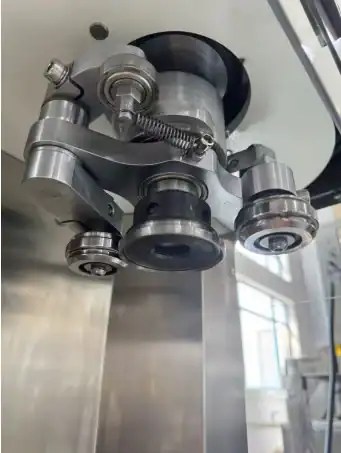

The extra costs were absorbed by us on that order, as a one-off decision. Under a different contract, the same costs could have fallen on the factory, the buyer or the trucking company.
How to Reduce the Risk Before Goods Leave China
- Know your term and your delivery point. “FOB Ningbo” and “FCA factory” put the same truck journey at different parties’ risk.
- Specify crating and securing for heavy items. A machine needs a crate built for it and a load that is strapped, not just placed.
- Photograph before loading. Photos and video of the goods and the loaded truck make any later claim far easier.
- Check insurance coverage for the inland leg. Some cargo policies start at the port, not the factory.
- Inspect again after an incident. Test the goods before they are re-crated, not after arrival.
Damage found only after arrival is a different problem with different evidence. We cover that in what to do when a shipment arrives damaged from China. For the full story of the sealing machine and the rest of the order, read the custom packaging materials case study.
This article explains general Incoterms principles and is not legal advice. Your own contract and the exact delivery point it names decide where risk passes.
Shipping machinery or fragile goods from China?
We confirm crating, check goods before loading, document every step with photos and video, and handle problems on the ground if something goes wrong before export.