The client runs a women’s apparel factory in Ecuador and had been buying fabric in Keqiao for years. Even so, his request for fabric sourcing from China came with only three specs: composition, weight and width. This case study shows how one physical swatch, a factory shortlist prepared before his trip and a day on the ground in Keqiao turned that thin brief into an exact match and repeat fabric orders.
Starting brief
3 specs + 1 swatch
Factories shortlisted for his visit
3 to 5 in Keqiao
Result
Exact match, then repeat orders
The Client: An Experienced Apparel Buyer in Ecuador
The client is not new to China. He owns a women’s apparel factory in Ecuador and had bought fabric in Keqiao, Shaoxing, for several years before he contacted us.
This time he needed women’s clothing fabric for a trial order of a few hundred meters per color. He wanted to see whether we could find the right fabrics at the right price before committing to larger volumes.
Three Specs Were Not Enough
The brief listed composition, fabric weight and width. It did not include yarn count, whether the fabric was knitted or woven, the knit or weave structure, or the finishing. The client could not supply those details himself.
With only three numbers, factories can offer fabrics that tick every box on paper but look and feel different in the hand. We explained that risk to the client early and suggested he send a physical swatch instead.
Read which fabric specs actually matter and how to find fabric from a sample →
Fabric Sourcing from China: From One Swatch to an Exact Match
The client mailed us his swatch before his trip to China. We worked two channels at once: factories in Keqiao that we shortlisted on 1688, and fabric suppliers we have worked with for years in the physical market.

We sent the swatch to the candidate factories and asked them to match it on four points: surface texture, thickness, stretch and hand-feel. Our first target was an exact match. For specifications that are harder to find, we also collected close alternatives with similar composition and handle, so the client had a fallback.
For each option, we put the price, minimum order and lead time into one comparison sheet and collected physical swatch cards so the client could compare fabrics side by side. Our guide to sample management in China sourcing explains how we keep track of samples like these.

For the black fabric, the factory found the same fabric as the client’s sample, and the client accepted it.
Preparing the Client’s Visit to the Keqiao Fabric Market
Our early emails and WhatsApp messages had been quick and specific, and the client already planned a trip to China to buy fabric. He added us to his list of visits.
We did not wait for him to arrive. Based on what he was looking for, we shortlisted three to five source factories in the Keqiao fabric market that were strong in his fabric types, well qualified and easy to work with. For each one, we summarized:
- The fabric categories it does best
- Its equipment
- How it prefers to take and run orders
We then turned the shortlist into a visit route, so his limited time in Keqiao went to the most relevant factories.
On the Ground in Keqiao
When the client arrived, we went with him through the market and the shortlisted factories. We translated and handled introductions, but the more useful part was the analysis: we pointed out the differences in each factory’s equipment, quality control and ability to hold lead times, so he could compare suppliers quickly and ask the right questions.
He confirmed his intention to work with us during that visit. For how we assess suppliers in general, see how to verify a Chinese supplier.
Packing, Checking and EXW Pickup
The fabrics were regular stock fabrics with no logo printing or special finishing. Rolls were wrapped in plastic film to protect them from dirt and moisture in transit, which is the standard packing for fabric rolls.
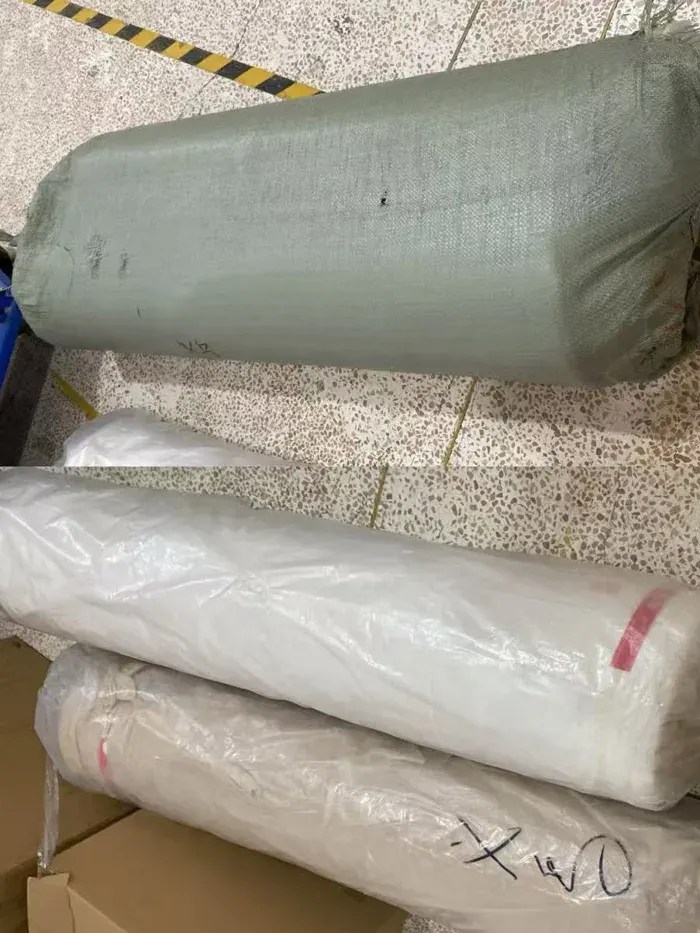
The goods were checked before pickup and passed. The order was on EXW terms and the client used his own long-term forwarder, so once the goods were ready we notified him in advance and the factory helped load the truck when the forwarder arrived.
Results
The client was satisfied with the fabric quality, how closely the fabrics matched his samples and how quickly we worked. Since that first order, he has placed repeat orders for several more fabrics.
What came next: after the fabric orders, the same client asked us to source finished women’s tops for his business. That project, from fabric to more than 20,000 finished garments, is covered in our private label women’s tops case study.
Two things made the difference. First, replacing an incomplete spec sheet with a physical swatch, so factories matched the real fabric. Second, using our presence in Keqiao to prepare his visit, so the trip ended with a decision rather than a list of business cards. Keqiao’s China Textile City is described as Asia’s largest textile hub (China Daily), and having someone on the ground makes that scale manageable. If you need a sourcing team in China, see our China sourcing agent service.
Looking for fabric in China?
Send us the specs you have and, if possible, a physical swatch. We will match it with factories in Keqiao and compare price, MOQ and lead time for you, or plan your visit if you are coming to China.