Most sourcing projects start with a factory that’s already made something close to what the buyer wants. This one didn’t. A Singapore-based Amazon seller came to us wanting to build an electric yarn winder — a product his own brand didn’t sell yet, and one that didn’t really exist in a mature form on 1688 either.
Electric yarn winder sourcing from China turned out to mean something different here than it does for an established product: no factory had built this exact item before, so there was no shortcut to skip. That single fact shaped almost everything that followed: the factory search, the eighteen months it took, and the price ceiling that never moved.
An Established Amazon Brand Betting on a New Product Line
The client runs OLIKRAFT, a brand with a mature, steadily-selling line of manual yarn winders on Amazon in the US and Canada. He wanted to add an electric version to the lineup — same customer base, higher price point, more reason to come back to the brand. For a brand at this stage, electric yarn winder sourcing from China is less about finding a factory than finding one willing to develop something from a blank sheet. He’d already designed three exterior concepts himself and needed a partner to handle everything after that: factory sourcing, product development, tooling, production, and shipping.

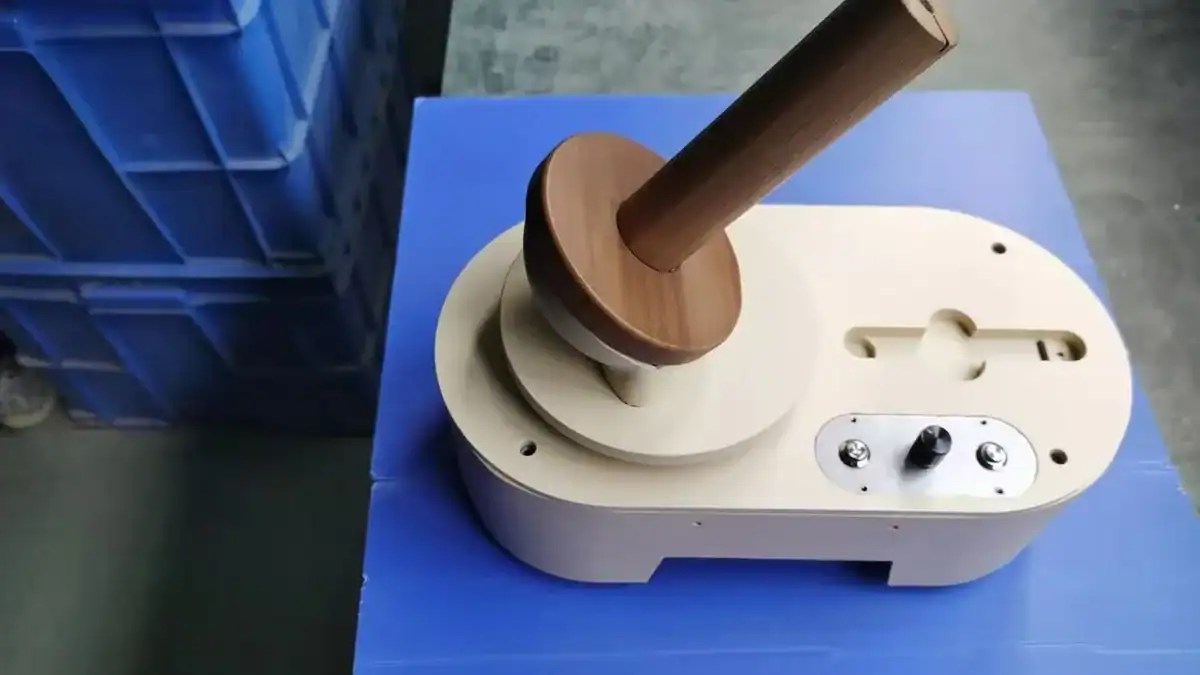
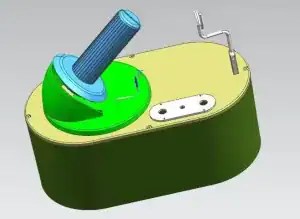
The first structural model used to plan tooling before any molds were cut.
Why Most Factories on 1688 Turned the Project Down
We started the factory search on 1688.com, the usual first stop for this kind of sourcing. It didn’t work here. This was a brand-new, structurally complex product that needed fresh mold development, and most factories we approached either couldn’t handle that level of engineering or simply didn’t want a custom tooling order with no proven demand behind it.
We ended up finding the right factory through a professional referral — a Guangdong-based manufacturer that specializes in custom mechanical equipment development. We vetted them specifically on three things: R&D capability, mold-making capability, and production capacity. That’s a different checklist than what you’d use for a factory making an existing product with minor tweaks, and it’s worth knowing the difference before you start calling suppliers for something genuinely new.
A mid-development test run after the switch and spool redesign, checking winding function under load.
Why the First Sample Missed the Mark
There was no existing electric yarn winder to reference, which meant the first sample was built on assumptions rather than proven design. It fell short on winding speed, on some finish details, and on a few functions that only became obvious once the unit was actually running yarn.
We stayed on the factory through the redevelopment — tracking R&D progress, feeding back client input, and pushing adjustments as the product matured. It took roughly two months of repeated testing and revision before the sample hit the mark the client was after.
Five Rounds of Changes Before the Design Was Locked
Once the base sample worked, the client kept refining it. Over the course of sampling, he asked for a color change, then a full redesign of the control method — swapping a remote switch for a foot pedal — followed by adjustments to the yarn clip structure, the winding spool design, and the base chassis. Each one of those triggered a new round of factory coordination and a new sample.
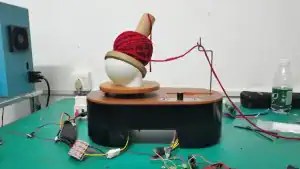
The first working prototype, built before the exterior design was finalized.
None of these were small requests. Moving from a remote switch to a foot pedal, for example, isn’t a cosmetic change — it changes the internal wiring layout and how the housing has to be molded. We treated each revision the same way: confirm the change with the factory, schedule a new sample and test, and only send it to the client for approval once we’d checked it ourselves first.
Holding a $20 Retail Price Through a Full Custom Build
The client wanted this product to retail around $20 — a target that assumed relatively low manufacturing cost for something that, in reality, needed three to five separate molds. Early cost projections from the factory came in over that budget once tooling, parts, labor, and development were priced out.
Getting there took a joint effort with the factory: adjusting mold structure to simplify certain features, choosing more cost-efficient components where the design allowed it, and spreading the mold investment across the production run rather than loading it all into the unit price. This is the kind of tradeoff that doesn’t show up in a quote until someone’s actually pushing on it — a factory’s first cost estimate is rarely their best one.
Packaging Built for a Long Trip and a Real Brand
Because this product had to survive international freight rather than a short domestic hop, the client chose foam shockproof packaging over anything lighter. The following February, he sent over his own brand packaging design, and we coordinated with the factory to produce and assemble the packaging to that spec.

The client’s own brand packaging, produced to spec once the design was finalized.
For anyone building a private label product for Amazon, this is worth planning early rather than late — product packaging that looks right on a shelf and survives a container crossing are two different design problems, and this client solved both by locking packaging in well before mass production started.
What the Pre-Production and Bulk Inspections Actually Checked
Once the molds were finished, the factory built and tested pre-production samples. We ran full checks on winding function, switch sensitivity, structural fit, and appearance quality. When something didn’t pass, we sent it back for correction and retested — more than once on some units — until the product held up consistently.
Bulk inspection followed the same discipline once production and packaging were both running: checking every batch for damage, correct function, packaging integrity, and alignment with Amazon’s selling standards for a product in this category. For sellers shipping into Amazon’s FBA compliance requirements, that last check matters as much as the physical inspection — a functionally good unit can still get flagged at the warehouse if labeling or compliance documentation isn’t lined up first.
Logistics Handled By the Client’s Own Freight Partner
This client already had a long-term freight forwarder handling his shipping, so our role on the logistics side was narrow by design: pre-shipment inspection and labeling, nothing more. The 3,000 units shipped in two batches and landed at Amazon’s US and Canada warehouses in August.
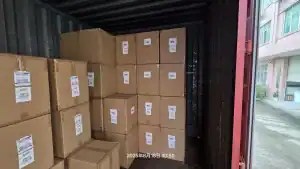
Part of the 3,000-unit order, loaded for the first of two shipments to the US and Canada.
Eighteen Months, One Delivered Product, and a Second Order Already Planned
From first development conversation to final shipment, this project ran close to a year and a half. That span covered R&D and sampling, mold optimization, certification work, mass production, inspection and labeling, and split shipping — all the way through to 3,000 delivered units.

The finished product, ready for shipment after eighteen months of development.
The client is already planning an upgrade to the product and has new purchase orders in the pipeline. For a first order on a completely new product, that’s the outcome that matters more than the delivery date — a client who wants to keep building on what got made, not just close out the order and move on.
What This Case Shows About Electric Yarn Winder Sourcing From China
Buyers underestimate how different a brand-new product build is from sourcing something a factory has already made a hundred times. When there’s no reference case, the first sample is a starting point, not a finished answer — and the buyer needs to be prepared for a testing cycle measured in months, not weeks. Electric yarn winder sourcing from China, in this case, meant the whole timeline had to bend around a factory learning the product alongside the client, not just producing to a known spec.
Mid-project design changes are also more expensive than they look on a spec sheet. Swapping a switch type or reworking a housing detail after tooling has started means new mold work, not a quick tweak — that’s true whether you’re customizing a $20 product or a $200 one. Buyers who plan for that cost upfront negotiate from a much stronger position than buyers who find out about it mid-development.
One thing overseas buyers rarely know: factories capable of real mold development and R&D are a much smaller pool than factories capable of running an existing production line. Vetting for tooling and engineering capability, not just unit price and MOQ, is what actually determines whether a brand-new product gets built at all.
Let Us Handle All Your China Import Work
Whether you’re building custom products or sourcing other wholesale products, our experienced sourcing team handles everything from design review and sample making to bulk order contracts, inspection, and final delivery.
FAQ: Sourcing a New Electric Product From China
How long does custom mold development take when sourcing electronics from China?
For a genuinely new product needing multiple molds, expect months rather than weeks — this project took roughly two months just to get the first working sample right, before any design changes were layered on top. Build that timeline into your launch plan from the start.
Is 1688.com a good starting point for electric yarn winder sourcing from China?
It’s worth checking first, but many factories on 1688.com are set up for existing product lines, not custom mold development. For products with no reference case, a referral to a factory that specializes in mechanical equipment development is often more reliable than platform searching alone.
How many molds does a new electronic product usually need?
It depends on the design’s complexity, but a product with multiple moving parts — a winding head, spindle assembly, and housing, for example — can easily need three to five separate molds. Factor this into your cost projections before setting a target retail price.
Mid-project design changes. A color swap is cheap; changing a switch type or a structural component after tooling has started usually means re-cutting a mold, which adds real time and cost that doesn’t show up in the original quote.
Do custom electronics for Amazon need special compliance checks before shipping?
Yes — beyond product function and packaging, sellers need to confirm the product meets Amazon’s category-specific compliance requirements before it reaches an FBA warehouse, since non-compliant listings can be flagged or restricted after the fact.
If you’re developing a new electronic product from scratch and need a China sourcing agent who can manage mold development, cost negotiation, and quality control end to end, you can start with a free sourcing trial or contact us directly. See our full range of sourcing services for other project types we handle.