The client runs a packaging business in the United States with a small warehouse. He was moving from reselling packaging to supplying it under his own name and building a website to sell it. For that, he needed custom packaging materials from China (foam, inserts, tin cans, color boxes and stickers) plus a semi-automatic sealing machine to pack orders himself.
He had no designer. And the machine was damaged on its way from the factory to the port. This case study covers both problems and how they were solved.
Products
Foam, tins, boxes, stickers + a machine
Machine repair
About half a month
Reorders in the first year
3
The Brief: Custom Packaging Materials Plus a Sealing Machine
The order combined several product types, each from a different kind of factory:
- Custom foam inserts and grooved inserts to hold products in place
- Tin cans
- Color boxes
- Stickers
- A semi-automatic sealing machine
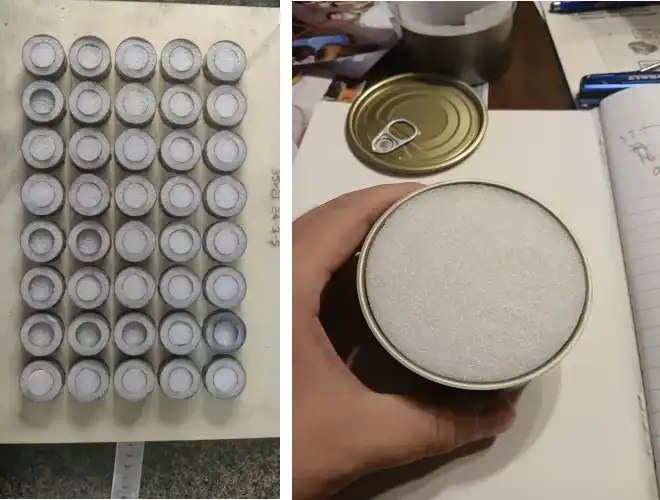
We searched for suppliers on 1688, China’s domestic wholesale platform, shortlisted factories for each item and compared samples before recommending suppliers. For the client, the point was one contact handling several packaging categories and a machine, instead of managing each factory himself. Our product packaging service covers this kind of multi-item packaging order.
Packaging Design Without a Designer
The client knew what he wanted his packaging to look like but had no designer to turn that into print-ready artwork. Rather than hire one, we worked through the factories’ own design teams:
- The client described what he wanted: sizes, colors, logo position and the products each insert had to hold.
- We passed the brief to the factory designers, who produced artwork as PDF files.
- The client reviewed and confirmed the PDFs.
- The factories made samples from the confirmed artwork. Where a sample was not right, it went through a second round.
This route works well for small businesses, but it needs clear briefs and careful proof checks. We explain the full process in custom packaging for small business without a designer.
Matching the Sealing Machine to the US Market
A machine made for the Chinese market will not necessarily work in a US warehouse. Before ordering, we confirmed the specifications with the client and the factory:
- Capacity, matched to his expected order volume
- Mold size, matched to the packaging he would be sealing
- Voltage and frequency for the US
- Plug type for the US
The machine was built to these specifications.
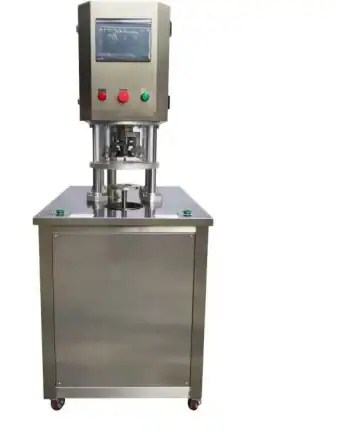
The Damage: A Machine That Fell in Transit to the Port
The problem came after the machine left the factory. During inland transport, the driver had not secured the crate. When the truck braked, the machine fell over, and several parts were bent or broken.
We weighed three options:
| Option | Problem |
|---|---|
| Send the machine back to the factory | Another round of transport, with the same risk and more time |
| Ask the factory to send an engineer | Depended on the engineer’s availability and travel |
| Repair locally, with the factory guiding by video | Chosen: fastest, and no further transport |
The factory sent replacements for the bent parts. One broken part was made of a special material, and it took several welders before we found one who could weld it properly. To be sure the machine would work in the US, we bought a transformer and tested it at US voltage before repacking it.
The repair took about half a month in total. The machine went into a new wooden crate and sailed later than planned. The extra costs (welding, the transformer, the new crate and the freight impact of the delay) were absorbed by us on this order. That was a one-off judgement for this case, not a standing policy.
Who carries the risk when goods are damaged before they leave China depends on the trade term you buy on. Under FOB, for example, the International Chamber of Commerce places the transfer of risk at the point the goods are on board the vessel. We explain how this works under EXW, FCA and FOB in FOB risk transfer: who pays when goods are damaged before export.
Consolidation, Repacking and Delivery
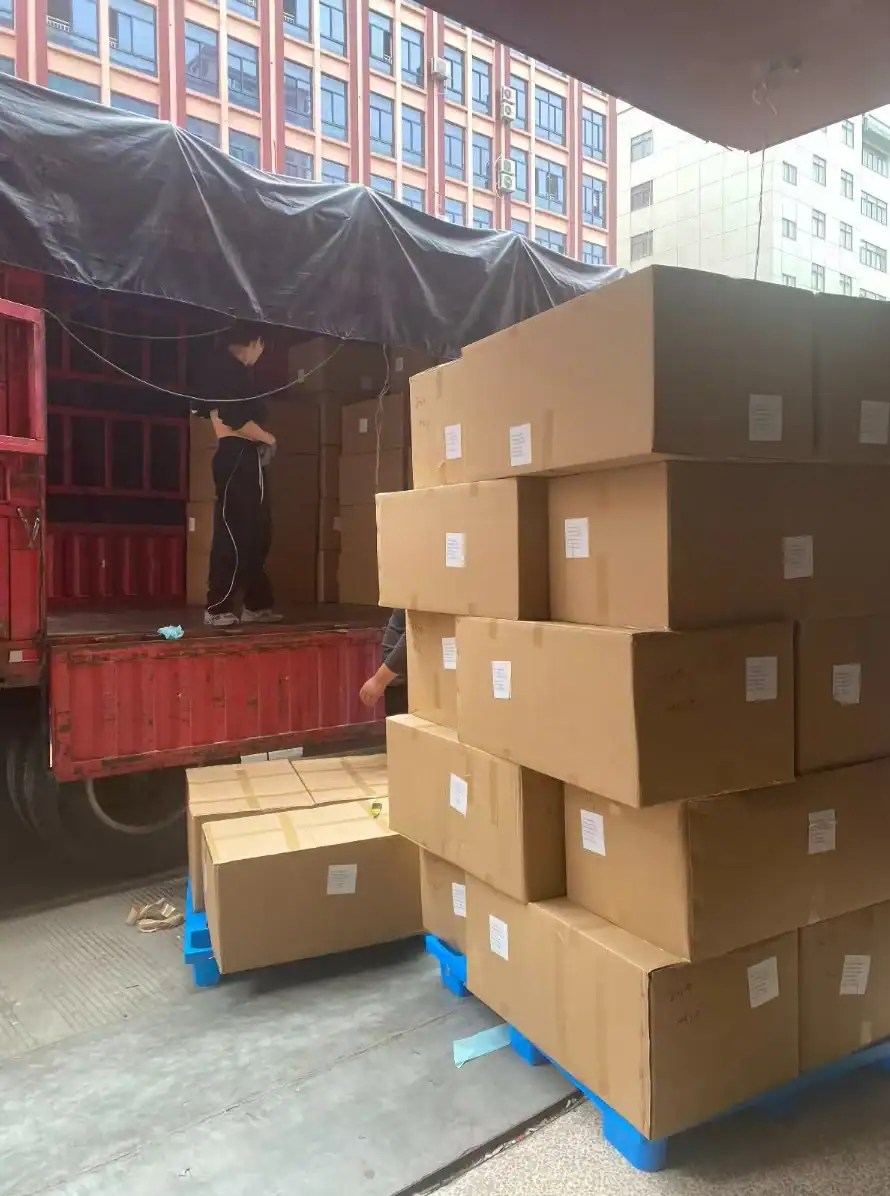
With the machine ready, everything was brought together at our warehouse. The packaging materials were re-cartoned and labelled, the goods were palletised, and we sent the client photos and video of the final load. The shipment was delivered by truck to his warehouse. For more on combining goods from several factories, see our shipment consolidation service.

Results
- The client received all packaging materials and a working sealing machine set up for US power.
- Packaging artwork was produced without hiring a designer.
- He has placed three reorders in the first year.
Sourcing packaging, inserts or packing equipment?
Tell us what you need to pack and where it will be used. We will coordinate factory designers for your artwork, match machines to your local power supply, and consolidate everything into one shipment.