Many buyers looking for custom packaging for small business stop at the same point: they know roughly what the box should look like, but they do not have a designer to produce print-ready artwork. In China, that does not have to stop the project. Many packaging factories have in-house designers who can turn a clear brief into artwork, which makes custom packaging without a designer realistic.
We used this route for a US packaging business that sourced foam inserts, tin cans, color boxes and stickers through us. This guide explains how it works and where it goes wrong.
Why Custom Packaging for Small Business Often Stalls at Artwork
Factories quote from specifications and print from artwork files. A small business owner often has neither: just a product, a logo and an idea. Hiring a freelance designer adds cost and another round of back-and-forth, and the designer may not know the factory’s printing limits, dielines or materials.
Factory designers know exactly those things. What they do not know is your brand and your customer. The job, then, is to give them a brief good enough to fill that gap. That brief is the most important document in any custom packaging for small business project.
Custom Packaging for Small Business in 5 Steps: From Brief to Approved Sample
- Brief. You describe what you want: product dimensions, packaging type, colors, logo and its position, any text, and what each insert or compartment must hold.
- Artwork. The factory designer produces the artwork, usually as a PDF showing the layout on the dieline.
- Proof check. You review the PDF and confirm or request changes.
- Sample. The factory makes a physical sample from the confirmed artwork.
- Second round if needed. If the sample is not right (color, fit, finish), the artwork or structure is adjusted and a new sample is made.
On our client’s order, we passed his brief to the factory designers for each item, sent him the PDFs to confirm and then managed the samples. Where a sample was not right, it went through a second round before approval.
What to Put in the Brief
A complete brief lets the factory quote accurately and design the first draft close to what you want. If you are also briefing the product itself, our private label product checklist covers the rest.
| Item | What to give the factory |
|---|---|
| Product | Exact dimensions and weight; a physical sample if possible |
| Logo | A vector file (AI, EPS, SVG or vector PDF), not a screenshot |
| Colors | Color references, plus a photo of anything you want matched |
| Text | Final wording, typed out, including any required label text |
| Inserts | What each slot holds and how tight the fit should be |
| References | Photos of packaging you like and why you like it |
How to Check the PDF Before Sampling
The PDF is the last cheap point to make changes. Check it slowly:
- Every word: spelling, product names, contact details, sizes.
- Logo: position, size and that it is sharp, not blurry.
- Dieline: which panel is the front, where folds and cut lines fall, and whether anything important sits on a fold.
- Colors: a screen will not show printed color exactly, so confirm critical colors on the physical sample.
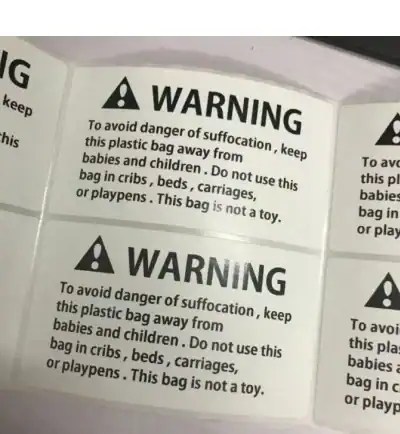
- Required warnings: if your packaging includes plastic bags, check what warning text your market requires and make sure it is in the artwork.
- File format: for anything you may print elsewhere later, ask for a print-ready PDF. Many printers work with PDF/X formats, defined in ISO 15930-7 (PDF/X-4).
What Drives the Cost of Custom Packaging for Small Business
Packaging prices depend on choices you make in the brief. The main cost drivers are:
- Quantity: setup costs for printing plates, cutting dies and molds are spread over the order, so small runs cost more per unit.
- Structure: a simple folding carton costs less than a rigid box, a tin or a box with a custom insert.
- Material: board thickness, paper type and insert material such as foam or card.
- Printing: number of colors, printing inside as well as outside, and special colors.
- Finishes: lamination, foil, embossing and spot UV each add cost and sometimes time.
Ask the factory to quote two or three options side by side, for example a printed folding carton and a rigid box, so you can see what each choice costs before the artwork is final. For more on materials and suppliers, see our guide to sourcing customized packaging.
Who Owns the Artwork?
Ask before you start. Some factories treat the artwork as part of the order and will send you the files; others prefer to keep them so that reorders come back to them. If you want the freedom to move production later, agree in writing that you will receive the final editable files.
When You Should Still Hire a Designer
Factory design works best for clear, practical packaging: color boxes, labels, inserts and tins with a logo and some text. Consider your own designer if:
- Packaging is central to your brand and you need a distinctive look across many products.
- You need a full brand identity, not just a box.
- You will print with several factories and need one consistent master file.
Common Mistakes with Custom Packaging for Small Business
- Approving the PDF without checking the dieline, then finding the logo on a fold.
- Judging colors on screen instead of on the printed sample.
- Measuring the product but not the insert fit, so items rattle or do not fit.
- Forgetting channel rules: Amazon, for example, has its own labeling and packing requirements; see our Amazon FBA prep guide.
- Not asking for the editable files, which makes it harder to reprint elsewhere later.
FAQ
Can a packaging factory in China design my packaging?
Many can. Factory designers usually prepare artwork on the factory’s dieline from your brief, logo and references, and send it as a PDF for approval. The quality of the result depends on how clear your brief is.
What is the minimum order for custom packaging for small business?
It varies by structure, material and printing. Simple printed boxes usually have lower minimums than rigid boxes, tins or custom inserts. Ask each factory for minimums on your exact specification.
How many sample rounds should I expect?
Often one or two. Plan time for a second round if colors, fit or finish need adjusting.
For multi-item packaging orders, we coordinate the factory designers, check proofs and manage samples for you. See our product packaging service, or read how it worked on a real order in the custom packaging materials case study.
Have a packaging idea but no designer?
Send us your product, logo and a few references. We will brief the factory designers, check the PDF proofs with you and manage samples until the packaging is right.