Christmas decoration sample approval is easier when the buyer and factory agree what they are comparing. A reference photo can show the look you want, but it rarely defines the dimensions, materials, finish or construction needed to reproduce that look.
For importers, wholesalers and brands developing a seasonal range, the useful question is not simply, “Does this look close enough?” It is, “Which features must match, what variation is acceptable, and what evidence do we need before production?”
This guide focuses on turning a reference image into an approval standard for decorative products. It does not replace product-specific safety checks, or assume that a visually approved sample is ready for every market or use.
Separate what the photo shows from what it cannot tell you
A photo may show a silhouette, color combination, surface effect and accessory arrangement. It may not show the back, the joints, the true scale, the weight or the way an item stands or hangs.
Start with an annotated reference. Point to the features that matter and label unknowns as questions. Do not turn guesses into specifications.
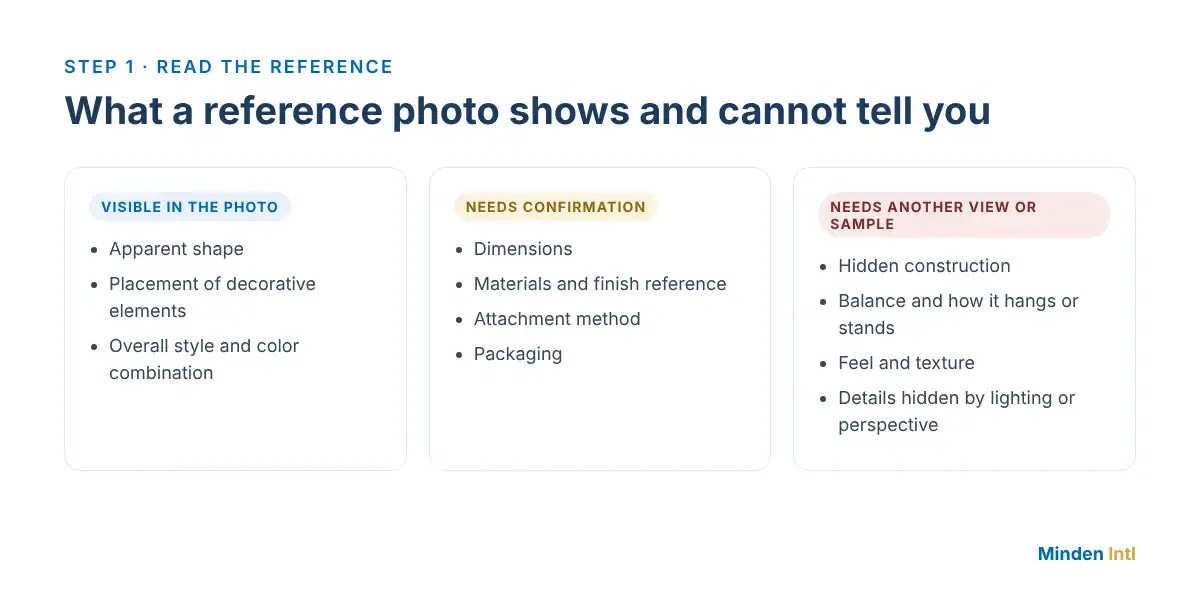
- Visible: the apparent shape, placement of decorative elements and overall style.
- Needs confirmation: dimensions, materials, finish reference, attachment method and packaging.
- Needs another view or sample: hidden construction, balance, feel and details obscured by lighting or perspective.
Use reference designs and images you are entitled to use. If ownership or permission is unclear, resolve that before asking for a reproduction or putting the image into public-facing content.
A ruler or known object in a photo can help discussion, but perspective still matters. Confirm actual dimensions rather than treating measurements taken from an image as final manufacturing instructions.
Write a short specification before requesting the sample
Give each style a clear identifier and describe its intended use: for example, a hanging ornament, a decorative pick or a tabletop display. Then explain how it will be displayed and handled.
The specification should cover the finished dimensions, relevant proportions, materials, color reference, surface finish, accessory arrangement, attachment points and packaging. Add the target quantity, destination market and required timing so the supplier can assess the actual project.
For colors, agree a physical reference or another clearly identified standard where needed. A screen image alone is a weak basis for deciding whether a production color is acceptable. When color is critical, compare physical references under controlled viewing conditions, such as those set out in ISO 3664. For dimensions and tolerances, have the supplier and buyer agree measurable requirements that suit the product and process; do not apply arbitrary numbers to every decoration.
This is one part of turning a product idea into a production specification. The objective here is narrower: make the next sample answer specific questions, instead of producing another version that everyone judges differently.
Divide features into must-match, flexible and unresolved
Not every visible detail has the same commercial importance. A silhouette may define the design, while a hidden fixing can change if it performs as required. Make those distinctions before the supplier chooses components.
- Must-match features
- Features that define the approved appearance or required use. State the reference and acceptance method for each one.
- Flexible features
- Details where an alternative may be acceptable. Describe the permitted range or require the buyer to approve the proposed alternative.
- Unresolved features
- Questions that still need a decision, supplier confirmation or a physical sample. They are not approved simply because they appear in the latest photo.
For a decorative pick, for example, the buyer might prioritize the leaf outline and the relationship between the main elements, while allowing a different concealed attachment. That is an illustrative buying decision, not a default specification for all picks.

Build an approval sheet around observable evidence
Use a sheet that compares the reference, the current sample and the decision. The checklist below is a starting structure; agree the actual requirements with the supplier for your product.
| Review area | Evidence to request | Decision to record |
|---|---|---|
| Shape and proportions | Front, side and back views, plus measured dimensions. | Which outline and dimensional requirements are met or need correction? |
| Color and finish | Consistent lighting, close-ups and the agreed color or finish reference. | Is the result accepted against that reference, or is another sample needed? |
| Materials and accessories | Material description, component details and confirmation of production availability. | Are the proposed materials accepted? Is any substitution still open? |
| Assembly and intended use | Relevant detail views, handling demonstration and a physical check where necessary. | Does the sample meet the agreed construction and use requirements? |
| Packaging | Packed sample, packing method and agreed checks for the delivery route. | Does the packaging protect the approved item and match the order requirements? |
Do not replace those decisions with one percentage score. A sample can look broadly similar while failing one feature that matters to the buyer. Equally, a small, accepted difference does not have to trigger a complete redesign.
Use photos and video for the questions they can answer
Ask the supplier to identify the sample version in every review set and show the same views consistently. Include the full item, detail shots of disputed features and measurements where relevant.
Video can help show how an ornament hangs or how a decorative element is attached. It cannot reliably communicate every aspect of color, texture or strength. If the decision depends on those qualities, agree a physical sample review or the appropriate inspection or test.
Remote approval can therefore be part of a controlled sample management process, but its scope must be clear. Record which features were reviewed remotely and which still need another form of evidence. A positive reply to one photograph should not be interpreted as approval of unseen details.
A Minden Intl case: why an approved design still needs component control
In a custom Christmas decoration project for a US wholesaler, the buyer supplied a reference image rather than a ready-to-order stock item. Minden Intl shortlisted three factories and moved the reference design into custom sample development.
During production, an unavailable accessory caused a color mismatch. The factory adjusted the color and used a compatible replacement component; the revised result was reviewed and approved before shipment.
The lesson is not that every decoration needs the same sampling process, or that one similarity target fits every design. It is that the approved appearance must remain connected to the components the factory will actually use. If a component changes, the relevant approval needs to be revisited.
This also explains why “the sample was approved” is not a complete answer to a production question. The buyer needs to know whether the current goods still follow that sample and the documented changes.
Make the final decision specific enough for production
Before releasing production, identify the approved sample and specification version. List any accepted variations, resolve open changes and confirm the material and accessory plan.
Keep the final record short but unambiguous:
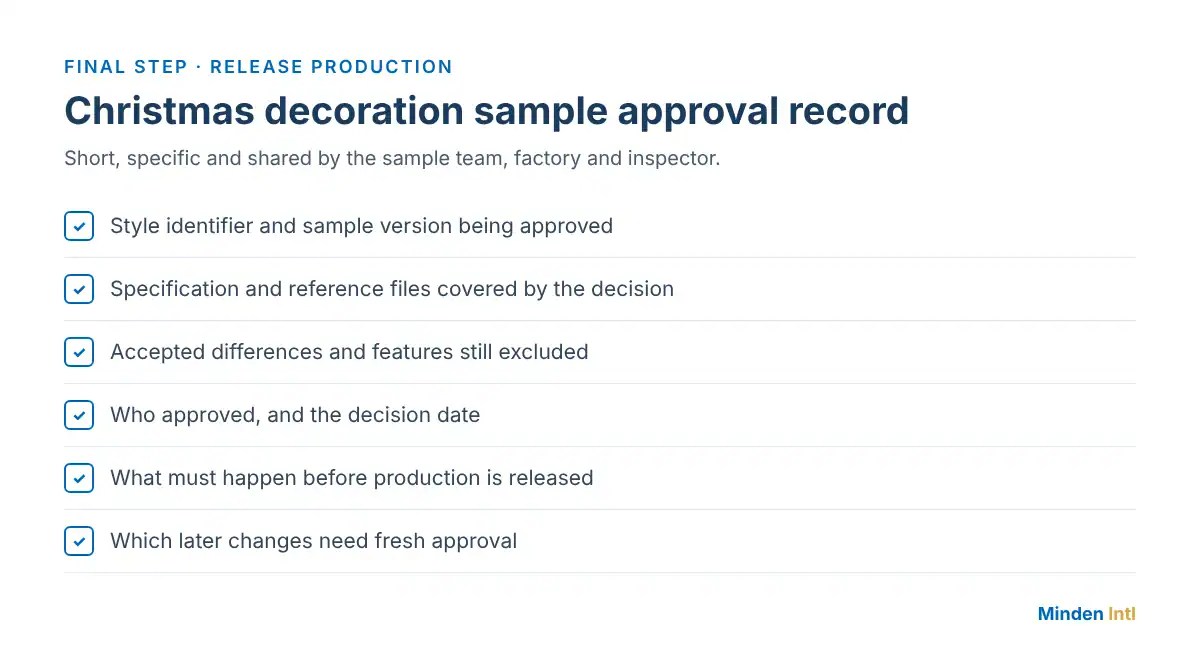
- Style identifier and sample version being approved.
- Specification and reference files covered by the decision.
- Accepted differences and any features still excluded from approval.
- The person giving approval and the decision date.
- What must happen before production can be released.
- Which later changes require fresh approval.
If approval is conditional, write the condition and how it will be checked. Do not label the whole item production-approved while a critical feature remains undecided.
The factory should retain or have access to the agreed production reference. Inspection criteria should use the same reference, including accepted variations. Avoid leaving the sample team, production team and inspector to work from different versions of the design.
What to send Minden Intl for a sample review discussion
Send the reference image, intended use, approximate order quantity, destination country and required timeline. Include any dimensions or material requirements you already know, and mark the features that cannot change.
If you already have a sample, add clear photos and explain the specific differences you want resolved. Discuss your reference design and sample requirements with Minden Intl. We can review the sourcing and development requirements with you before the next sample is commissioned.
Frequently asked questions
Can a factory make a decoration from one reference photo?
It may be able to propose a development approach, but one photo is not a complete specification. Confirm the dimensions, materials, construction and unseen details before deciding what the sample must prove. If you have a physical item rather than a photo, see how to manufacture a product from a sample.
How close should a custom sample match the photo?
Agree the important features and acceptance criteria rather than using a universal similarity percentage. A must-match feature can be unacceptable even when the overall appearance looks close.
Can I approve a Christmas decoration sample remotely?
You can review some visible features through suitable photos and video. If the decision depends on qualities that cannot be assessed reliably on screen, arrange a physical sample or another agreed check.
What happens if a factory changes an accessory after approval?
Review the proposed replacement and its effect on appearance, use, packing and timing. Record the decision against the approved version before treating the changed item as accepted.
Developing Christmas decorations from a reference photo?
Send us your reference image, target quantity, destination market and the features that must match. We will check which factories can develop it, what the sample needs to prove and how much time your season leaves for approval.