Christmas decoration quality inspection should do more than count visible defects. For a seasonal order, the practical question is whether the production batch still matches the buyer-approved sample closely enough to ship, or whether the supplier must correct the affected goods and present them for reinspection.
The approved sample, specification sheet and written buyer decisions form the release baseline. When production differs from that baseline, the sourcing team should identify the exact deviation, separate affected goods from acceptable goods, define a correction plan and obtain written approval before shipment. This process protects both the sales season and the buyer’s product standard without pretending that every difference has the same commercial impact.
Christmas decoration quality inspection starts with the approved production baseline
A useful inspection cannot begin with a reference photo alone. Before production, the buyer and supplier should have a controlled set of approval evidence: the approved physical sample or sealed sample, dated photos or video, the latest specification, artwork files, packaging requirements, approved materials and components, and any written exceptions.
If several versions were discussed during development, label the final production version clearly. A supplier may remember the latest conversation differently from the buyer, especially when a component, colour or accessory changed during sampling. The release baseline should show which version replaced earlier versions and who approved it. Where sample versions, revision dates and approval records were already logged during development, this comparison becomes a lookup rather than an argument; our guide to sample management in China sourcing explains how that record is built.

For custom seasonal products, the broader development process belongs in our guide to custom Christmas decoration development in China. This article focuses on what happens after a production batch no longer matches approved evidence.
Describe the deviation before deciding the remedy
“The goods are wrong” is not a workable inspection finding. A useful report connects each deviation to a product, SKU, location, quantity or sample set and shows it with clear evidence. The buyer should be able to understand what changed without standing in the factory.
| Inspection question | Evidence to record | Decision it supports |
|---|---|---|
| What differs from the approved sample? | Side-by-side photos, measurements and specification references | Whether the deviation is confirmed |
| Which goods may be affected? | SKU, carton, production lot or clearly defined sample scope | Whether goods can be separated |
| Does the difference affect function, appearance, packaging or buyer claims? | Observed result and the applicable approval requirement | Priority and release risk |
| Can the supplier correct it without creating another problem? | Proposed method, responsible person and new evidence required | Rework, replacement or escalation |
| What must be checked again? | Original deviation plus possible side effects of the correction | Reinspection scope |
Do not turn an observation into a universal defect rule. A small colour difference may be important for a coordinated retail collection but less important for another order. A missing accessory, weak attachment or incorrect carton mark can create a different business risk. The buyer’s approved criteria and intended market decide the consequence. Some seasonal categories also carry their own obligations: lighted decorations sold in the United States, for example, fall under specific CPSC rules for seasonal and decorative lighting products, so a deviation touching wire size, strain relief or overcurrent protection is never a cosmetic question.
Separate affected goods from releasable goods
Once a deviation is confirmed, the supplier should identify the affected quantity and stop it from being mixed with goods that may still be acceptable. This can mean holding a production lot, marking cartons, separating unfinished units or pausing packing until the decision is clear.
The goal is not to create paperwork. It is to prevent an uncertain product from moving into sealed cartons or a container before the buyer decides what to do. If the factory cannot trace the affected goods, the reinspection scope may need to be broader because the sourcing team cannot safely assume that only the first visible group is involved. Whether a factory can trace a production lot at all is usually visible much earlier, during supplier verification, rather than on the day a problem appears.
Choose among correction, replacement, approved exception or hold
The appropriate response depends on the product, the deviation, the remaining schedule and the buyer’s commercial requirements. Four decisions are common:
- Correction or rework: the supplier can bring the goods back to the approved standard with a defined method.
- Replacement: correcting the existing unit is impractical or could make the product less reliable.
- Buyer-approved exception: the buyer knowingly accepts a specific, documented difference for a defined quantity. Silence is not approval.
- Hold: shipment or packing pauses while facts, samples or a protected commercial decision are still missing.
A sourcing team should not accept a change on the buyer’s behalf unless that authority has been given. The team can document the problem, explain options, coordinate the supplier and collect new evidence. The buyer should confirm the final commercial choice in writing.
Make the rework instruction testable
“Please improve this” invites another disagreement. A rework instruction should state the affected SKU or lot, the approved reference, the exact correction, what must not change, who performs the work, how corrected goods remain identifiable and what evidence is required before reinspection.
For example, when an accessory colour differs from the approved sample, the instruction should not merely request a better match. It should refer to the approved component or approved visual reference, specify whether the accessory will be replaced or adjusted, and require new comparison evidence under consistent lighting before the goods move forward.

Reinspect the original issue and possible side effects
Reinspection is not simply a second set of photographs. First confirm that the original deviation has been corrected. Then check whether the corrective work created a new issue: damage to a finish, loose assembly, mixed components, changed dimensions, damaged packaging or incomplete relabelling.

The reinspection scope should match what is known about the affected goods and the correction method. This article does not prescribe a universal sampling level or claim that one method is appropriate for every product; where a statistical plan is used, the level and limits should be agreed in advance against a recognised standard such as ISO 2859-1. Product risk, buyer requirements and any applicable market obligations need separate consideration.
Reconfirm the seasonal timeline after rework
A seasonal order has a warehouse or sales deadline, but that does not justify releasing unresolved goods. Once the supplier proposes a remedy, update the critical path: completion of rework, reinspection, packing and container loading, transport and the buyer’s latest acceptable warehouse date.
If the revised path no longer supports the buyer’s commercial deadline, the sourcing team should show that early. Possible decisions may include changing the shipment split, prioritising approved SKUs, changing a non-protected logistics arrangement after approval, or holding the order. In one rubber duck order for a UK buyer, a Christmas deadline was protected by moving the shipment to air freight rather than by compressing the approval steps. No shipment date should be promised until the actual order, route and required approvals are known.
A real Minden Intl Christmas project
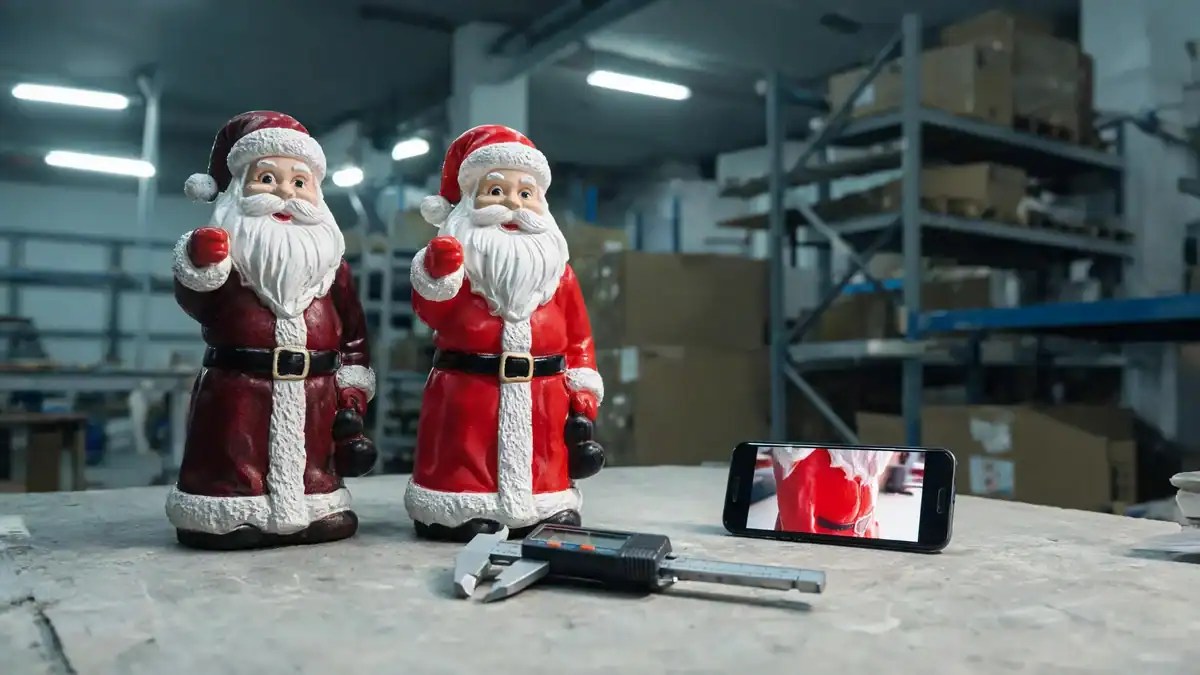
In one custom Christmas decoration sourcing project, production inspection identified a minor colour or accessory difference in one item. The supplier reworked the affected goods, and the buyer reviewed the correction through a second round of photo or video evidence before confirming that the order could move forward.
The useful lesson is the decision sequence, not a universal defect rate or rework time: compare against approved evidence, identify the affected item, ask the supplier for a specific correction, review the corrected result and keep the buyer’s release decision documented.
What buyers should send for a quality issue review
To assess a deviation efficiently, send the approved sample or approval record, the latest specification, clear photos or video of the issue, affected SKU and quantity information, packaging status, the required warehouse date and any market-specific requirement that may influence release, such as the EU General Product Safety Regulation for goods entering Europe.
Minden Intl can help overseas buyers coordinate suppliers in China, document production differences, follow up corrective work and arrange a practical reinspection path, as part of the wider set of services a China sourcing agent handles.
Frequently asked questions
Is every difference from a sample a reason to reject the order?
No. The buyer should consider the approved requirement, the type and extent of the deviation, product function, customer expectations and any applicable obligation. A documented exception may be possible, but it should be explicit and limited to the affected goods.
Can a factory’s photos replace reinspection?
Photos or video can provide useful evidence, especially for a clearly visible correction. They may not show hidden, functional or widespread issues. The buyer and sourcing team should decide what evidence is sufficient for the specific risk. A written, product-specific check list makes that decision repeatable; our furniture quality control checklist shows the same principle applied to a different category.
Should corrected goods be checked only for the original defect?
No. The original issue must be checked again, and the review should consider side effects caused by handling, replacement, repainting, repacking or other corrective work.
Who approves shipment after rework?
The party with commercial release authority should approve shipment. A sourcing team can inspect, document and coordinate, but should not silently expand its authority or treat a supplier’s statement as buyer approval.
Facing a production deviation on a Christmas order?
Send the approved sample or approval record, clear photos or video of the deviation, the affected SKU and quantity, and your latest acceptable warehouse date. We will tell you what can realistically be corrected, reinspected and shipped before your season closes, and where we think it cannot. We do not promise a fixed rework outcome or timeline without reviewing the facts.