Key Takeaways
Shipping goods from overseas requires careful planning to balance logistics costs against the risks of transit damage. Understanding whether to utilize full or partial container loads is the first step in optimizing your supply chain for profitability.
- FCL shipping usually offers better cost-per-unit efficiency for larger volume orders.
- Air freight remains significantly more expensive but can be necessary for time-sensitive, low-volume stock.
- Accurate packing lists are essential for maximizing physical container capacity and reducing volumetric weight waste.
- Professional on-site factory inspections help mitigate risks during the container loading process.
- Customs documentation errors frequently lead to costly port storage and detention penalties at the arrival destination.
Making the choice between full and partial container loads
Navigating the logistical gap between Full Container Load (FCL) and Less than Container Load (LCL) shipments is a frequent hurdle for importers starting their business journey. Choosing the right method depends heavily on your specific product volume, budget, and urgency. Reliable experts from Minden International point out that a common oversight among beginners is assuming that LCL is always cheaper when shipping only a few pallets. In reality, the consolidation, handling, and documentation fees associated with shared container space can quickly eat into your anticipated profit margins.
Calculating the break-even point for FCL versus LCL shipments
Determining viability starts by examining the volumetric weight of your goods against the flat rate of a 20ft container. If your shipment volume consistently exceeds 15 cubic meters, it is often more cost-effective to secure a dedicated unit. Importers often overlook that base freight rates do not include the additional handling costs associated with CFS (Container Freight Station) operations, which can add significant overhead to smaller LCL orders.
When we compare transport modes, the pricing structure for LCL can be deceptive. Beyond the port-to-port ocean freight cost, you must account for local handling, documentation processing, and potential consolidation surcharges at destination warehouses. A common error is comparing base freight without asking for a detailed quote that includes all land-side inland costs, which can turn a supposedly inexpensive LCL shipment into a billing headache. The convenience of air freight often carries even steeper premiums, making it unsuitable for most bulk inventory unless speed is the absolute priority.
Sharing container space involves several points of contact where inventory is moved, packed, and unpacked alongside goods from other shippers. You should expect a higher risk of physical impact or contamination when your cargo is not the only freight in the box. Using extra-sturdy materials for internal product packaging is considered a best practice for any buyer intending to ship via shared LCL services to ensure goods arrive in retail condition.
How to determine when volume justifies a full 20ft container
Deciding to move into a full container usually follows a consistent pattern of business growth. When your recurring orders reach a specific tier, the predictability of FCL starts to outweigh the flexibility of LCL options. We often recommend a standard cost analysis table to our clients, helping them compare the total landed cost per unit across different volume scenarios to see when the transition makes financial sense.
| Shipment Type | Typical Volume | Cost Predictability | Risk of Damage |
|---|---|---|---|
| Air Freight | < 1 CBM | Low | Very Low |
| LCL Ocean | 1 – 15 CBM | Moderate | High |
| FCL 20ft | 25 – 28 CBM | High | Minimal |
Using this logic, you can clearly identify the tipping point where your volume justifies the leap to an FCL shipment while maintaining healthy margins.
Planning cargo volume and container equipment needs

20ft vs. 40ft Container
Successful logistics management relies on how well you understand the spatial limits of standard ocean equipment. Whether you are using a 20ft, 40ft, or 40ft High-Cube container determines how your manufacturer packs your goods for the journey. It is vital to coordinate with your supplier regarding pallet dimensions and stackability early in the procurement phase. When you effectively manage these variables, you prevent shipping air and wasting expensive freight space on empty gaps.
Matching your product dimensions to 20ft and 40ft high-cube layouts
Standard containers have specific internal height and width constraints that do not always perfectly align with non-standard carton sizes. For example, if you are sourcing bulky furniture, a high-cube container provides extra vertical clearance that can be the difference between fitting your entire order and needing an overflow shipment. Consult your freight forwarder or a China sourcing agent to verify if your specific product dimensions will optimize the equipment type you have selected.
How to use accurate packing lists to maximize internal floor space
A packing list is more than just a document for customs; it is the blueprint for how your inventory will sit inside a metal box for thirty days. You must ensure the manufacturer provides the final weight and volume per carton before the goods leave the factory floor. Accurate documentation provides several operational benefits for the buyer:
- Enables precise pre-calculation of warehouse storage space needed at the arrival port.
- Helps forwarders flag potential weight limit issues before the container reaches the scale.
- Simplifies the offloading process for destination trucking teams upon arrival.
- Provides a clear reference for checking inventory integrity after long-distance transit.
By leveraging this detailed list, you can plan your logistics workflow with confidence.
Assessing the trade-off between weight limits and cubic volume
Ocean vessels impose strict weight limits on containers to maintain ship stability during international transit. A common beginner error is filling a container to the brim with very dense goods, only to face heavy fines because the total weight violates local port regulations. Always balance your total cubic volume with the weight limits mentioned in the Container Shipping guidelines provided by your carrier.
Why specific product packaging choices dictate your total shipping costs
How your factory chooses to package the goods directly influences how many units can actually fit on the floor of the container. If cartons are too large or lack proper corner reinforcement, your supplier may be forced to leave more space for protective dunnage which reduces your total yield. Making smart adjustments here, such as requesting specialized product packaging that is both resilient and compact, is one of the most effective ways to lower your landed costs.
Documentation and legal compliance in a beginner guide to shipping containers from china

Documents for ocean freight shipments must be legal and compliant.
Navigating the legal requirements for international trade is often the most intimidating aspect of moving cargo across the sea. Regulations are strict, and even minor errors in your paperwork can result in your goods being impounded by local customs officials for weeks. As you proceed with your easy shipping guide, ensure you focus on standardizing your internal processes to match international legal definitions. Being proactive with these documents effectively protects your investment throughout the transit phase.
Deciphering the bill of lading and commercial invoice requirements for customs
Your commercial invoice and the Bill of Lading (BOL) serve as the primary legal evidence of the trade transaction, carrying immense weight with port authorities. The commercial invoice must precisely describe the quantity, value, and origin of each item to satisfy local customs requirements. For official guidance on what standard import documentation usually entails, you can review details provided by the government import portals for international shipments.
How to verify if your business meets local import registration standards
Before you import your first container, you must register your business with relevant tax and customs authorities, such as obtaining an EORI number in the UK or an EIN in the United States. Failing to complete your registration before the shipment arrives is a common reason for significant port delays. Check your local regulations early, as these administrative steps can often take several weeks to process.
Many product categories—like electronics, children’s toys, or household appliances—require specific safety certifications before they can legally be released into the market. You need to confirm that your manufacturer maintains valid test reports that align with local standards, such as CE for Europe or UL certification for North America. If you lack the proper documentation, you may find that your goods are denied entry, leading to total loss of the shipment.
Avoiding common errors that trigger customs holds at the destination port
Customs holds are most frequently triggered by discrepancies between the stated cargo description and the actual contents found during inspection. You must ensure that your packaging lists, commercial invoices, and packing declarations are perfectly consistent across the board. If the customs agent finds that the declared weight differs significantly from the measured weight, your shipment will likely be pulled for an intrusive inspection.
Mitigating risks during factory loading and onsite inspection
Overseeing the loading process allows you to confirm that everything agreed upon during the negotiation phase actually makes it through the loading bay door. Relying only on digital photos sent by a factory can lead to disappointment upon arrival if the original products were swapped for cheaper variants. We strongly advise clients to supervise the loading process, confirming the integrity of the seals before the container leaves the factory gates.
Why remote supervision is required to confirm actual cargo integrity
Remote supervision or professional on-site oversight ensures that your custom-packaged units are loaded in a way that prevents collapsing. Factories moving at high speeds might neglect proper pallet stacking, which invites crushed packaging. Having an independent pair of eyes on the ground ensures the team follows your specific stacking instructions rather than just trying to finish the job as quickly as possible.
Balancing the cost of professional quality inspection against shipment value
Quality inspections are an essential insurance policy for your business, especially when dealing with high-value goods. While some buyers are tempted to skip the inspection to save a small portion of the budget, the cost of receiving a defective batch far outweighs the price of an independent inspection report. If the inspector flags an issue, you retain the leverage to demand corrections before the container is permanently sealed.
How to secure photographic evidence of the container sealing process
Securing visual documentation of the loading process and the final seal number provides both a record and a deterrent against theft. Your agent should be able to provide clear photosshowing the container interior, the state of the palletization, and the specific bolt seal number logged against your shipment documents. If an issue occurs during transit, this photographic record becomes your primary evidence for insurance claims.
Coordinating with a reliable China sourcing agent to manage factory timelines
Factory timelines are often fluid, and managing expectations requires daily communication on the ground in China. A professional China sourcing agent helps you synchronize production, inspection, and ocean freight booking to ensure the goods move directly from the assembly line to the port without unnecessary warehouse waiting times.
Managing arrival procedures and final inland distribution
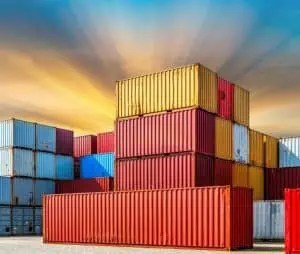
Container ships at industrial ports in the business of import, export
Managing the last leg of your journey is just as critical as the ocean transit itself. Coordinating the movement from the arrival port to your warehouse or distribution center requires seamless communication with your trucking partner. Poor timing or lack of preparation can lead to unexpected detention fees that accrue daily, as port storage is never free and rarely cheap.
Coordinating the handoff between ocean freight lines and trucking partners
Timing the pick-up requires you to provide the trucking company with the necessary release documents as soon as the container clears customs. If the handoff is slow, the terminal operator may levy storage penalties that fall directly on your business account. We recommend confirming the availability of your trucking carrier at least 5 to 7 days before the vessel arrives to ensure the container is extracted in the first window of availability.
Preparing the destination warehouse facility for container arrival
Your warehouse must be physically equipped to handle a container arrival, whether it requires a loading dock or a ground-level ramp for side-unloading. If your warehouse staff is not prepared for the volume or the specific packaging configuration, the unloading process can slow down until the container is timed out. Properly checking your receiving facility requirements avoids simple but costly operational delays.
How to handle unexpected port congestion and detention fees
If you find yourself facing port congestion or sudden delays, keep an open line of communication with your freight forwarder to discuss potential alternatives for inland transit. While avoiding congestion is not always possible, having an early warning allows you to plan your stock movement and adjust your sales expectations accordingly. Detention fees are typically unavoidable if the delay is systemic, so factor these potential costs into your contingency budget.
Tracking shipment status to avoid warehouse storage penalties
Utilizing shipping container tracking tools provides real-time information on your shipment status as it approaches the final destination. Keep these tools active even on your phone so you can anticipate arrival dates and coordinate your receiving team before the clock starts running on costly storage fees. Using these tools is one reliable method to avoid unexpected costs that trap less experienced importers.
Conclusion
Successfully importing via container is a process defined by attention to logistical detail and proactive risk management at every stage of the shipment cycle. By carefully planning your volume, verifying your documentation, and overseeing your factory loading by professionals, you can navigate the complexities of international trade with minimal disruption. Treating shipping as a core operational competency rather than an afterthought ensures your inventory reaches your shelves reliably and without unnecessary overhead.
Shipping Your First Container?
We supervise factory , verify seal numbers, and coordinate freight booking so your goods move from the assembly line to the port without sitting in a warehouse. Send us your product list and destination—we’ll tell you whether FCL or LCL makes sense for your volume, with real numbers.
Get a Free Shipping Assessment
Frequently Asked Questions
What is the difference between FCL and LCL?
FCL, or Full Container Load, means you have exclusive use of a container for your goods, while LCL, or Less than Container Load, signifies your items share space with other shippers within a single container.
How do I calculate my shipping container capacity needs?
Calculation should involve both the total cubic volume of your master cartons and the weight of your goods, making sure to stay within the weight limits defined by your container type and ocean carrier.
Why do my shipping fees keep changing during the process?
Shipping quotes often fluctuate based on fluctuating fuel surcharges, container space availability, and additional land-side fees, such as inland handling, customs processing, and unpredictable port storage charges.
Do I need a customs bond for my container shipment?
Many countries demand that you provide some form of financial guarantee or bond to cover duties, taxes, and fees associated with your imports before the container is released from the port.
What happens if my container arrives during port congestion?
If a port is congested, your container may sit for extra time in the terminal, leading to detention and storage fees that accrue daily until you effectively secure your cargo for inland movement.
Is it necessary to hire a professional sourcing agent?
While independent import is possible, professional agents provide local oversight during factory production and loading, which is critical for verifying item specifications and managing the complex timeline of international manufacturing.
How can I verify that my container was properly sealed?
You should always require your local on-site inspection team to send photographic evidence of the container being sealed with a unique bolt seal number matching your shipping documents.